NFPA 70B: Complete Guide to Electrical Equipment Maintenance & Compliance
From insight to action – get to know Timly now!

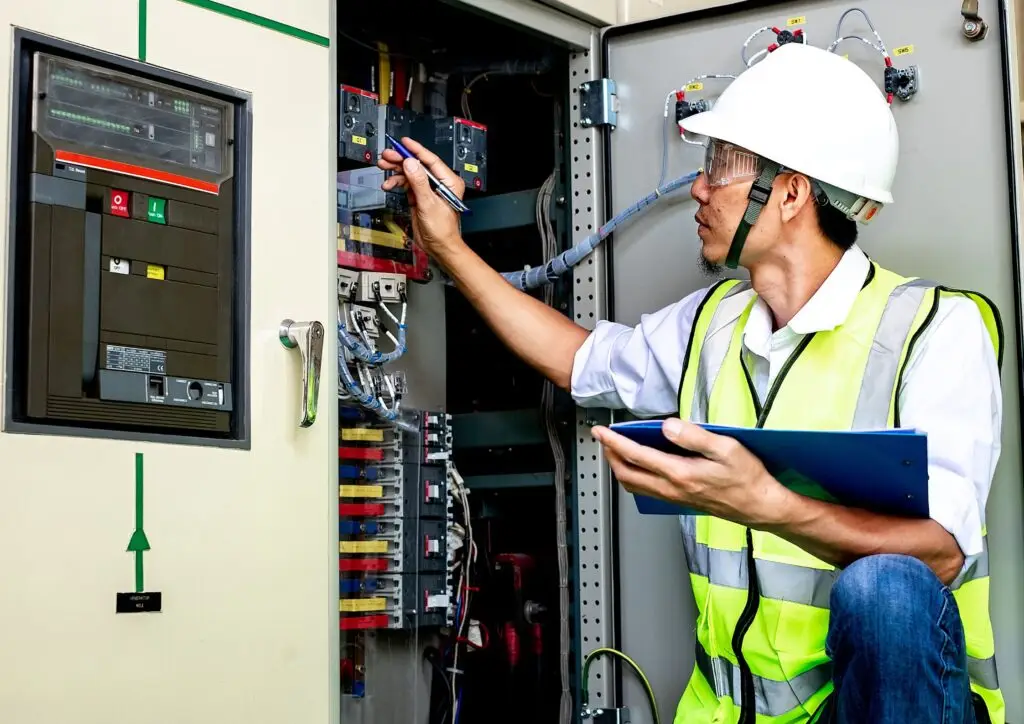
For decades, electrical maintenance in the United States was guided by best practices and manufacturer recommendations rather than binding rules. That changed in 2023, when the National Fire Protection Association transformed NFPA 70B from a “Recommended Practice” into a full-fledged standard with mandatory language. For facility managers, safety officers, and electrical maintenance teams, this shift is a major deal. “Should” became “shall,” and voluntary guidance became a benchmark that OSHA can now use to issue citations.
This guide breaks down exactly what NFPA 70B requires in 2026, how it interacts with NFPA 70E and OSHA, which maintenance intervals apply to common equipment, and how to build an Electrical Maintenance Program (EMP) that keeps your team compliant and your facility safe.
What Is NFPA 70B?
NFPA 70B is the Standard for Electrical Equipment Maintenance published by the National Fire Protection Association. It defines the requirements for developing, implementing, and operating an Electrical Maintenance Program (EMP) for electrical, electronic, and communication systems in industrial plants, institutional and commercial buildings, and large multi-family residential complexes.
Unlike the National Electrical Code (NFPA 70), which covers installation, NFPA 70B focuses on what happens after equipment is energized: keeping switchgear, transformers, circuit breakers, cables, and control systems safe and reliable for their entire service life.
From Recommendation to Standard
Until 2022, NFPA 70B used advisory language by using a document that recommended good practices but did not require anything. The 2023 edition rewrote the document with mandatory “shall” language, and subsequent editions (including the current 2026 edition) have reinforced that direction.
Who Must Comply
The standard applies broadly to equipment owners in:
- Industrial plants and manufacturing facilities
- Institutional buildings (hospitals, universities, government)
- Commercial buildings (offices, retail, warehouses)
- Large multi-family residential complexes
- Data centers and mission-critical facilities
Why It Matters
Poorly maintained electrical equipment is a leading cause of arc-flash incidents, unplanned downtime, and fires. NFPA 70B provides the framework to reduce those risks systematically and because OSHA can cite the standard as the “minimum consensus requirements for safe electrical work practices,” non-compliance now carries real regulatory weight.

Key Changes in the 2023 and 2026 Editions
The transformation of NFPA 70B introduced several structural changes that facility teams need to understand.
Quick Take: The single most important change is that NFPA 70B now uses mandatory “shall” language, defines EMP elements as required, and sets maintenance intervals that OSHA inspectors can reference during citations.
The most notable updates include:
- Mandatory EMP elements are now explicitly defined in Section 4.2
- Maintenance intervals are prescriptive and tied to equipment condition
- System study intervals shall not exceed 5 years (short-circuit, coordination, incident energy)
- Field testing categories are clearly defined (online/offline, standard/enhanced)
- Condition-based maintenance replaces one-size-fits-all schedules
- Continuous monitoring and predictive techniques are now permitted to drive intervals
NFPA 70B vs. NFPA 70E: Understanding the Difference
The two standards are often confused, but they serve complementary purposes.
| Aspect | NFPA 70B | NFPA 70E |
|---|---|---|
| Focus | Electrical equipment maintenance | Electrical worker safety |
| Core Question | Is the equipment maintained? | Are workers protected? |
| Primary Output | Electrical Maintenance Program (EMP) | Electrical Safety Program (ESP) |
| Typical Owner | Facility / maintenance manager | Safety officer / electrical safety coordinator |
| OSHA Relevance | Cited for maintenance deficiencies | Cited for unsafe work practices |
Crucially, the two work together: NFPA 70E states that incident energy calculations become invalid if protective devices are not properly maintained per NFPA 70B. In other words, you cannot fully comply with 70E without 70B.
Building an NFPA 70B–Compliant Electrical Maintenance Program (EMP)
Section 4.2 of NFPA 70B defines the mandatory elements every EMP must include. Missing any of these elements is a compliance gap.
Required EMP Elements
Every compliant Electrical Maintenance Program shall include:
- An electrical safety program that addresses the condition of maintenance
- Identification of personnel responsible for each program element
- A survey and analysis of electrical equipment and systems
- Documented maintenance procedures for each type of equipment
- A plan of inspections, servicing, and suitable tests
- A maintenance, equipment, and personnel records-retention policy
- A process to prescribe, implement, and document corrective measures
- A process to incorporate design for maintainability in new installations
- A program review and revision process for continuous improvement
Appointing an EMP Coordinator
NFPA 70B Section 4.2 defines an EMP coordinator as the individual responsible for the program’s coordination, implementation, and operation. Appointing a qualified coordinator is the first practical step to compliance and is often the point where audits begin.
Documentation and Records Retention
Documentation is where many facilities fall short. NFPA 70B requires that maintenance activities, equipment inventories, test results, and personnel qualifications be recorded and retained. This is far easier to do and defend during an OSHA visit when records live in a centralized asset management platform rather than in binders or scattered spreadsheets.
NFPA 70B Electrical Equipment Maintenance Intervals
One of the biggest shifts in NFPA 70B compliance is the move to prescriptive, condition-based maintenance intervals. Chapter 9 defines maintenance frequency based on an Equipment Condition Assessment (ECA) that evaluates three factors:
- Physical condition of the equipment
- Criticality to the facility’s operation
- Operating environment (temperature, humidity, contamination)
The highest of these three values drives the maintenance interval. Condition 1 represents the best case (longest intervals), while Condition 3 represents the harshest case (shortest intervals).
Maintenance Frequency by Equipment Type
The table below summarizes the mandatory maintenance intervals from Chapter 9 for common equipment. All values are in months.
| Equipment | Task | Condition 1 | Condition 2 | Condition 3 |
|---|---|---|---|---|
| All equipment | Infrared thermography | 12 | 12 | 6 |
| Busways | Visual, cleaning, testing | 60 | 36 | 12 |
| Molded/insulated-case circuit breakers | All tasks | 60 | 36 | 12 |
| Medium-voltage power circuit breakers | All tasks | 60 | 36 | 12 |
| Motor control equipment | All tasks | 60 | 36 | 12 |
| Panelboards & switchboards | All tasks | 60 | 36 | 12 |
| Power & distribution transformers | Visual inspection | 12 | 12 | 6 |
| Power & distribution transformers | Electrical testing | 12 | 6 | 12 |
| Protective relays (electromechanical) | Electrical testing | 24 | 24 | 12 |
| Protective relays (solid-state) | Electrical testing | 36 | 36 | 12 |
| Switchgear | Visual inspection | Special | 12 | 6 |
| UPS systems | Visual inspection | Special | 6 | 1 |
These intervals do not supersede manufacturer guidelines but instead they apply in the absence of manufacturer instructions or as a minimum baseline.
System Study Intervals
NFPA 70B Chapter 6 requires that key engineering studies be updated at least every 5 years:
- Short-circuit studies (Section 6.3)
- Coordination studies (Section 6.4)
- Incident energy analyses (Section 6.7)
- Single-line diagrams and related documentation
NFPA 70B Training Requirements
While NFPA 70B does not prescribe a single certification, the standard makes clear that maintenance shall be performed by qualified personnel and that the EMP shall identify personnel responsible for each element. Training is therefore a compliance essential, not an optional extra.
Who Needs NFPA 70B Training
Training is critical for:
- EMP coordinators need a working knowledge of the entire standard
- Electrical maintenance technicians need equipment-specific procedures
- Facility and plant managers need to understand documentation obligations
- Safety managers need to align 70B with 70E and OSHA programs
- Engineering teams need to apply design-for-maintainability principles
Types of NFPA 70B Training
Training options generally fall into three categories:
- Overview courses (4–8 hours) covering the standard’s structure, EMP elements, and compliance path (ideal for managers and coordinators)
- Technical courses (2–5 days) covering equipment-specific testing methods, inspection procedures, and troubleshooting (ideal for technicians)
- On-site programs delivered by manufacturers or third parties, tailored to a facility’s actual equipment inventory
Key Training Topics
Any compliant training curriculum should cover:
- Structure of an Electrical Maintenance Program
- Equipment condition assessment methodology
- Maintenance intervals and scopes of work by equipment type
- Field testing categories (online/offline, standard/enhanced)
- Documentation and records-retention requirements
- Alignment with NFPA 70E and OSHA obligations

Practical Steps to NFPA 70B Compliance
The Electrical Safety Foundation International (ESFI) outlines an 8-step path to compliance:
- Step 1: Designate an EMP coordinator
- Step 2: Conduct an electrical infrastructure and equipment condition assessment
- Step 3: Update single-line diagrams and system studies older than five years
- Step 4: Perform remediation identified by the assessments
- Step 5: Determine maintenance intervals and scope based on the assessment
- Step 6: Embrace digitization of maintenance records and workflows
- Step 7: Update the EMP to verify compliance with current requirements
- Step 8: Audit the EMP every 5 years or less
Compliance Tip: Digitizing your EMP is not just a nice-to-have. NFPA 70B requires documented procedures, records retention, and continuous improvement, all of which are dramatically easier with a centralized asset and maintenance management platform.
Digitizing Your NFPA 70B Program With Timly
Meeting NFPA 70B in the real world means keeping track of hundreds, sometimes thousands, of pieces of electrical equipment, their maintenance histories, condition assessments, and next scheduled service dates. Spreadsheets and paper logs simply cannot keep up with the documentation, retention, and audit requirements of the standard.
A modern equipment management platform like Timly helps electrical maintenance teams:
- Centralize the equipment inventory with QR-code tagging of every asset, from switchgear to transformers
- Schedule recurring maintenance based on NFPA 70B intervals and equipment condition
- Store maintenance records, test reports, and inspection results in one auditable repository
- Assign responsibilities and track personnel qualifications to satisfy EMP requirements
- Generate reports for internal reviews, OSHA inspections, and 5-year EMP audits
Timly’s flexible data model lets teams map fields to Chapter 9 categories, condition assessment values, and system study dates, thereby turning NFPA 70B compliance from a paperwork burden into a repeatable, digital workflow.
Turning NFPA 70B Compliance Into a Competitive Advantage
NFPA 70B is the benchmark that OSHA, insurers, and safety auditors will measure your facility against. Facilities that treat compliance as a checkbox will struggle to keep up with mandatory intervals, documentation, and 5-year system study updates.
But teams that embrace NFPA 70B (e.g., by appointing a coordinator, building a real EMP, training their people, and digitizing their records) gain more than compliance. They cut unplanned downtime, extend equipment life, reduce arc-flash risk, and strengthen every audit conversation. In an era where electrical failures cost businesses millions in downtime and injuries, a well-run NFPA 70B program is one of the highest-return investments a facility can make.
FAQs About NFPA 70B
NFPA 70 is the National Electrical Code (NEC), which governs how electrical systems must be installed. NFPA 70B is the standard for how those systems must be maintained after installation. Both are published by the NFPA but serve different phases of an electrical system's lifecycle.
NFPA 70B is not a law and is not directly adopted by federal statute. However, OSHA can and does cite NFPA 70B as the minimum consensus requirement for safe electrical work practices, meaning failure to comply can result in OSHA citations and fines.
Maintenance intervals depend on the Equipment Condition Assessment. Most equipment in ideal conditions (Condition 1) receives a full maintenance cycle every 60 months, while equipment in harsh conditions (Condition 3) is serviced every 12 months or more frequently for critical items like UPS systems and transformers.
The equipment owner is responsible for implementing and documenting the EMP. NFPA 70B Section 4.2 requires the appointment of an EMP coordinator — a specific individual accountable for the program's coordination, implementation, and operation.
Compliance is documented through the EMP itself: written maintenance procedures, records of inspections and tests, equipment condition assessments, personnel qualifications, corrective actions, and periodic program reviews. Digital platforms that centralize these records make audits and 5-year program reviews significantly easier than paper-based systems.
Related Articles

Electrical Repair and Industrial Electrical Maintenance: A Practical Guide
July 1, 2026
Fire Extinguisher Inspection and Maintenance: NFPA 10 Compliance Made Easy
August 3, 2026
Electrical Equipment Safety Regulations 2016: A Complete Guide
September 1, 2025
Electrical Installation Condition Report (EICR): Requirements, Process, and Compliance
September 17, 2025
Industrial Maintenance: Definition, Types, Benefits & Best Practices
July 21, 2026
Medical Equipment Maintenance: Regulations, Inspection Intervals, and Electrical Safety
October 11, 2025