OSHA Fall Protection Standard: A Complete Guide to Requirements and Compliance
From insight to action – get to know Timly now!

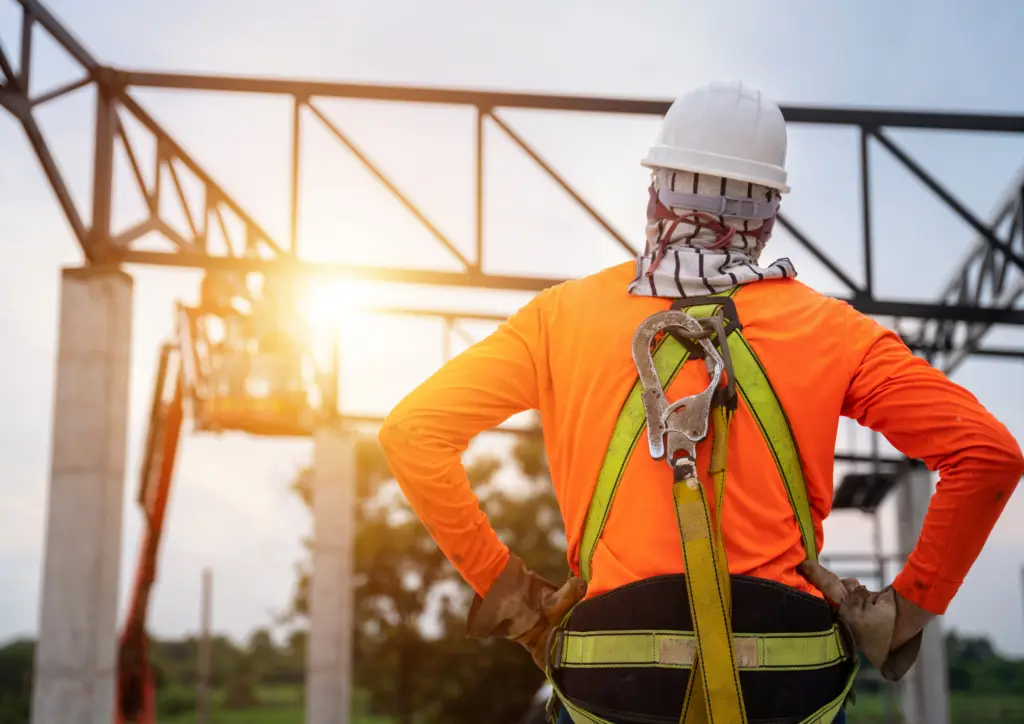
Fall protection has been OSHA’s most-cited standard for 15 years straight. In 2025, 29 CFR 1926.501 topped the list again, ahead of topics such as hazard communication, ladders, and lockout/tagout. The reason is clear: falls are still the number one killer on construction sites.
None of that is because the rules are secret or complicated. Most supervisors can tell you that construction workers need protection and that this protection needs to start at 6 feet. But where companies get caught is in the details. In the uncovered skylight on a re-roof job, in the guardrail that’s a few inches too short, in the new hire who never got a signed training record, or in the harness that’s been sitting in a truck bed for three years without anyone looking at it.
In this article, you’ll find out what the OSHA regulation for fall protection actually requires, including the specific numbers and factors inspectors check and test. Also, we will provide you with information regarding the paperwork side of fall protection that trips up a lot of otherwise careful contractors and companies.
What Is the OSHA Fall Protection Standard?
When people talk about “the OSHA fall protection standard,” they usually mean one of two things:
- For construction, it’s 29 CFR 1926 Subpart M. That subpart has four sections. 1926.500 covers scope and definitions. 1926.501 says where you need fall protection. 1926.502 says what the protective systems have to look like and how strong they have to be. 1926.503 covers training.
- For everyone else (warehouses, manufacturing plants, utilities, distribution centers, facilities maintenance) it’s the Walking-Working Surfaces rule in 29 CFR 1910 Subpart D. Section 1910.28 tells you when protection is required, and 1910.29 sets the system criteria.
The trigger heights are different, and that catches people off guard.
| Industry / Activity | Standard | Trigger Height |
|---|---|---|
| General industry | 29 CFR 1910.28 | 4 feet |
| Shipyards | 29 CFR 1915 | 5 feet |
| Construction | 29 CFR 1926.501 | 6 feet |
| Longshoring / marine terminals | 29 CFR 1918 | 8 feet |
| Scaffolds (construction) | 29 CFR 1926.451 | 10 feet |
| Steel erection | 29 CFR 1926.760 | 15 feet (30 feet for connectors, with conditions) |
Example: A maintenance tech at a bottling plant climbs onto a 5-foot platform to adjust a conveyor. That’s general industry work, so the 4-foot rule applies and they need protection. In comparison, a framing crew working on a deck at the same height is under construction rules and doesn’t hit the trigger until 6 feet, unless there’s dangerous equipment underneath them.
One more thing to keep in mind for construction: scaffolds, ladders, and steel erection have their own subparts (L, X, and R) with their own fall protection rules. Subpart M covers everything those don’t.

OSHA 1926.501: Key Fall Protection Requirements in Construction
The core rule in OSHA 1926.501 can be summarized in one sentence:
If someone is working on a surface with an unprotected side or edge 6 feet or more above a lower level, you have to protect them with guardrails, a safety net, or a personal fall arrest system (PFAS).
Anything after that needs to be looked at situationally. The following topics are the ones that come up most.
Unprotected Sides, Edges, and Leading Edges
Floor perimeters, open mezzanines, balconies, and roof edges at 6 feet or higher all need one of the three systems. Leading edges get the same treatment. On a deck or floor being built out section by section, the edge moves every day, so your protection has to move with it.
If you can show that guardrails, nets, and PFAS aren’t feasible for leading edge work, or would actually make things more dangerous, OSHA lets you use a written, site-specific fall protection plan instead. That plan has to meet 1926.502(k). Don’t treat it as an easy way out. OSHA puts the burden on you to prove conventional protection won’t work.
Holes, Wall Openings, and Excavations
Skylights in their truest form are holes in roofs, which is why a surprising number of roofing fatalities involve someone stepping back onto one. Hence, OSHA wants covers, guardrails, or PFAS around any hole more than 6 feet above a lower level. Covers are also required over smaller holes where someone could trip or knock materials through.
Wall openings need protection when the outside bottom edge is 6 feet or more above a lower level and the inside bottom edge is less than 39 inches above the floor. A window rough opening on the third floor before the window goes in is a typical example.
Excavations 6 feet or deeper need guardrails, fences, or barricades when the edge isn’t easy to see, for example when brush or tall grass hides it. Wells, pits, and shafts need barriers or covers too.
Roofing Work on Low-Slope and Steep Roofs
Roof pitch decides which options you have.
| Roof Type | Definition | Acceptable Protection |
|---|---|---|
| Low-slope roof | Slope of 4:12 or less | Guardrails, safety nets, PFAS, or a warning line combined with one of these or a safety monitoring system. On roofs 50 feet wide or less, a safety monitoring system alone is allowed. |
| Steep roof | Slope greater than 4:12 | Guardrails with toeboards, safety nets, or PFAS |
Other Covered Hazards
The rest of 1926.501 covers hoist areas, formwork and rebar, ramps and runways, overhand bricklaying, precast concrete, residential construction, and work above dangerous equipment.
Pay attention to that last one. If a worker is above machinery, open vats, degreasing tanks, or anything similar, they need guardrails or equipment guards even when the drop is under 6 feet. A 3-foot fall into a running machine can kill someone.
The section also requires protection from falling objects: toeboards, screens, canopies, or barricades, plus hard hats for anyone below.
Fall Protection Standards for Guardrails, Safety Nets, and Personal Fall Arrest Systems
Having protection in place is step one. Whether it meets spec is another, and OSHA cites both. The fall protection standards in 1926.502 (construction) and 1910.29 and 1910.140 (general industry) give the actual numbers.
Guardrail Systems
- Top rail at 42 inches, plus or minus 3 inches
- A midrail, screen, or mesh roughly halfway up, unless there’s a wall or parapet at least 21 inches high
- Top rail able to take 200 pounds of force pushed out or down
- Midrail able to take 150 pounds
- Nothing sharp or rough enough to cut someone or snag their clothes
Bring a tape measure on your next site walk. Guardrails built from scrap lumber on a busy job are often a few inches short.
Safety Net Systems
Nets go as close under the work as you can get them, and never more than 30 feet below. They have to be drop-tested on site, or certified by a competent person, before their initial use. After that, someone needs to inspect them every week, and any debris that lands in them should come out as soon as possible and no later than the next shift.
Personal Fall Arrest Systems
A personal fall arrest system (also known as PFAS) is the anchor, the connectors, and a full-body harness, usually with a lanyard, lifeline, or self-retracting device. The numbers that matter:
| PFAS Requirement | Criterion |
|---|---|
| Anchorage strength | 5,000 pounds per attached employee, or a safety factor of at least two under a qualified person’s supervision |
| Maximum free fall | 6 feet, without hitting a lower level |
| Maximum deceleration distance | 3.5 feet |
| Maximum arresting force | 1,800 pounds with a full-body harness |
| Snaphooks | Locking type only |
| Body belts | Not allowed in a fall arrest system |
If a harness catches a fall: It comes out of service immediately and can’t be used again until a competent person inspects it. Most companies just throw it away and buy a new one.
Hole covers have to hold twice the weight of whatever might be on them (people, tools, materials), be fastened down so they can’t shift, and be marked “HOLE” or “COVER.” A loose sheet of plywood doesn’t count.

Training, Inspection, and Rescue: The Fall Protection Requirements Employers Often Miss
The training rule, 1926.503, is on OSHA’s top 10 list every year, too. Plenty of those citations go to sites where crews were tied off properly. The companies can’t simply show a training record though.
A competent person has to train anyone who might be exposed to a fall hazard. The training should cover the hazards on that job, how to set up, maintain, and inspect the systems you’re using, how to wear and use the gear, and what each person’s role is if you’re using safety monitors or controlled access zones.
You need a written record for each worker with:
- The worker’s name
- The date or dates of training
- The signature of the trainer or the employer
Retrain when the job changes, when the equipment changes, or when someone clearly didn’t retain what they learned.
Inspections are the other gap. Workers are supposed to check their harness and lanyard for wear, damage, and deterioration before every use, and anything damaged gets pulled. Nets get inspected weekly. Most manufacturers and ANSI Z359 guidance also recommend a documented competent-person inspection at least once a year. In reality, the pre-use check is the one that gets skipped when the crew is running late, so a short checklist kept with the gear helps.
Then there’s rescue. OSHA requires prompt rescue after a fall, or you have to make sure workers can get themselves down because a person hanging in a harness can quickly develop serious suspension trauma.
Penalties in 2026 stayed at 2025 levels: up to $16,550 per serious violation, up to $165,514 per willful or repeated violation, and up to $16,550 a day for hazards that aren’t fixed by the abatement date.
How to Build a Compliant Fall Protection Program
Building a fall protection program starts with a walk-through. Go to every building and job site and list each edge, hole, roof, platform, ladder, and opening that’s above your trigger height. Take photos. You’ll use this list for everything else.
Next, decide how you want to handle each hazard. The best fix is getting rid of the hazard, like building components on the ground and lifting them into place. If for some reason that’s not possible, go with passive protection such as guardrails and hole covers, since they work whether or not anyone remembers to clip in. Also, use personal fall arrest and ppe where passive protection isn’t practical.
After the walk-through and the decision making, cover the rest:
- Buy equipment that meets OSHA criteria, and make sure the pieces are compatible with each other.
- Train everyone who’s exposed, and keep a signed record for each person.
- Inspect gear before every use and on a set schedule, and pull anything damaged.
- Write a rescue plan for each site and keep the rescue equipment there.
- Update the program when the work, the sites, or the equipment change, and after any incident or close call.
The next step is harder than it sounds once you have a lot of gear. A mid-sized contractor might have a few hundred harnesses, lanyards, and self-retracting lifelines spread across trucks, trailers, and job sites. Tracking all of that on paper or in a spreadsheet usually falls apart within a few months.
Timly’s asset management software gives each item a QR code and its own record. Crews scan the gear on site, you can see who has what, inspection results and certificates are attached to the item, and you get a reminder before the next inspection is due.
Making Fall Protection Regulations Work on Every Job Site
For construction, 1926.501 tells you where protection is needed, 1926.502 gives you the specs, and 1926.503 covers training. General industry works the same way under 1910 Subpart D, just with a 4-foot trigger instead of 6.
Most fall protection citations come from the same short list: open edges and holes, guardrails or anchors that don’t meet spec, and missing training or inspection records. Fixing them doesn’t take anything fancy.
Walk your sites regularly, use guardrails and covers wherever you can, train your people, and keep your inspection records up to date.
If keeping track of all that gear is the hard part, Timly can hold your equipment records, assignments, and inspection dates in one place, so you’re not digging through binders when an inspector asks to see them.
Explore the full scope by signing up for the free trial.
For more information, arrange a non-binding demo today.
FAQs About OSHA Fall Protection Standard
1926.501 tells construction employers where fall protection is required, such as at open edges, holes, and roofs. 1926.502 covers how that protection has to be built and how it has to perform, including guardrail height and strength, safety net placement, and limits for personal fall arrest systems.
In construction, it’s 6 feet. On low-slope roofs (4:12 or less), you can use warning lines and safety monitoring systems in certain combinations. Steep roofs need guardrails with toeboards, safety nets, or personal fall arrest systems. In general industry, the trigger is 4 feet, and there are extra rules for working near roof edges.
Before every use, by the person wearing it. Safety nets need a weekly inspection. Most manufacturers and ANSI Z359 guidance also recommend a documented inspection by a competent person at least once a year. Any gear that has stopped a fall has to be taken out of service until a competent person inspects it.
Only in a few situations. If you’re doing leading edge work, precast concrete erection, or residential construction, and you can show that conventional systems aren’t feasible or would create a bigger hazard, you can use a written, site-specific plan. A qualified person has to write it, and a copy has to stay on the job site.
Not for fall arrest. A body belt puts all the force of a fall on a worker’s midsection and can cause serious internal injuries, so OSHA requires a full-body harness. Body belts are still allowed in some positioning device systems.
Related Articles

OSHA Reporting And Recordkeeping Requirements: Complete Guide
October 12, 2026
OSHA Forklift Rules: Complete Guide To 1910.178, Certification, And Safety
June 4, 2026
Personal Protective Equipment Requirements: OSHA Rules, PPE Inspections, and Employer Duties
July 22, 2026

Construction Industry Safety Regulations: OSHA 1926, CDM & Site Rules
November 6, 2025
Workplace Injury Prevention: DGUV Regulations, Risk Assessments, and Occupational Safety
September 14, 2026