Personal Protective Equipment Requirements: OSHA Rules, PPE Inspections, and Employer Duties
From insight to action – get to know Timly now!

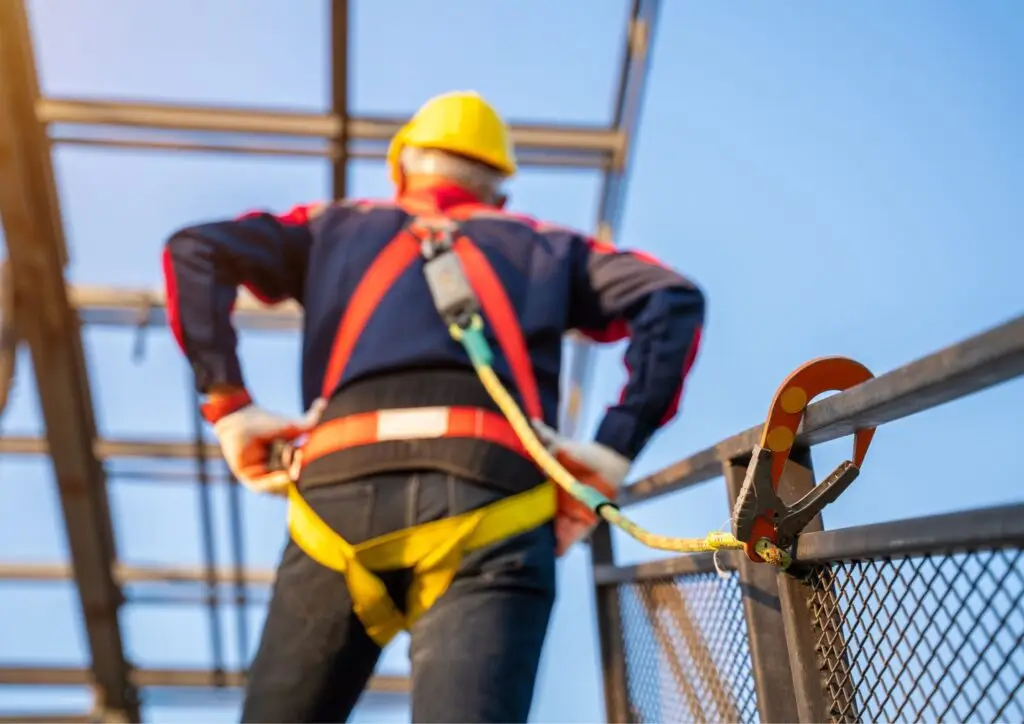
Personal protective equipment (PPE) is one of the most important foundations of an effective workplace safety program.
The main goal of a safety program should always be to protect employees from any workplace hazards, prevent injuries, and reduce illnesses. But in cases where health hazards cannot be fully eliminated through engineering controls or safer work processes, properly selected PPE often becomes the last line of defense.
For that reason, personal protective equipment must always be in good condition, and employees must also know how to use it correctly. Regular inspections are therefore essential.
Employers are responsible for selecting the right PPE, maintaining it, replacing damaged items, and training employees in correct use. In practice, this means that OSHA personal protective equipment obligations go far beyond simply buying safety gear. In constantly moving and changing business environments with differing responsibilities and tasks, a structured approach is extremely necessary to always ensure PPE compliance. Companies need clear processes for hazard assessment, equipment assignment, training, inspections, storage, and documentation. This is where digital PPE management and PPE inventory management become especially valuable.
What Is Personal Protective Equipment Under OSHA?
Under OSHA, personal protective equipment includes any equipment worn to minimize exposure to hazards that can cause serious injuries or illnesses in the workplace. This includes items such as hard hats, safety glasses, goggles, face shields, gloves, respirators, hearing protection, fall protection equipment, and protective footwear.
In practical terms, PPE is equipment that protects a worker against specific hazards and dangers. That is what differentiates it from ordinary workwear that has no protective function. A basic uniform shirt, for example, is not PPE unless it is specifically designed to protect against a defined hazard such as flame, chemicals, or arc flash exposure.
OSHA personal protective equipment rules are based on the principle that PPE is used when hazards cannot be completely removed by other measures. This means PPE requirement decisions should always be based on a hazard assessment. In case of strong PPE in safety management systems, PPE is not treated as a standalone purchase item, but as part of a larger safety strategy.
What Types of PPE Are Commonly Used?
Personal protective equipment requirements vary depending on the hazard and the job. This is where the challenges come in. In most workplaces, PPE is therefore grouped into practical categories, so employers can define the correct PPE requirement for each task and role. This helps with decisions and gives clear structure to both employers as well as employees.
- Head Protection
Head protection includes hard hats and safety helmets that protect against falling objects, impact, and in some cases electrical hazards. Employers must ensure the selected head protection matches the actual workplace hazards and remains in good condition. - Eye and Face Protection
This category includes safety glasses, goggles, and face shields. These items help protect against flying particles, sparks, chemicals, splashes, and harmful light exposure. Eye and face protection is a key part of OSHA personal protective equipment programs with focus on manufacturing industry, construction industry, maintenance management, and laboratory settings. - Hearing Protection
Hearing protection includes earplugs and earmuffs that are used where workers are exposed to excessive noise. In many workplaces, hearing protection is an important part of PPE in safety management because noise hazards are continuous and can often affect entire teams or departments. - Respiratory Protection
Respiratory PPE includes disposable masks, half-mask respirators, full-face respirators, and more advanced systems. This category is especially relevant where workers are exposed to dust, fumes, vapors, gases, or other airborne contaminants. Effective PPE management is especially important here because respiratory protection often involves fit testing, storage rules, and replacement schedules. - Hand Protection
Gloves protect workers from cuts, punctures, abrasions, chemicals, heat, cold, and other hand injuries. The correct glove depends entirely on the actual hazard, which is why a hazard-based PPE requirement is essential. One glove type is rarely suitable for every task. - Foot Protection
Protective footwear includes safety shoes and boots designed to protect against impact, compression, punctures, slips, and certain electrical hazards. This area is especially important when defining OSHA requirements for steel toe boots, because employers must determine when protective footwear is mandatory and ensure the models used are compliant. - Fall Protection
Fall protection includes full-body harnesses, lanyards, self-retracting lifelines, and anchor systems. In high-risk work environments, this category is one of the most critical parts of OSHA PPE requirements because failures can lead to fatal injuries. As a result, inspection, training, and documentation standards must be especially strict.

What OSHA Rules Apply to PPE?
OSHA personal protective equipment requirements are primarily built around formal safety assessment, equipment selection, employee training, proper maintenance, and enforcement. Outside the U.S., there are comparable frameworks to follow. In Germany, for example, DGUV regulations require PPE selection to be based on a documented risk assessment. Employers must first assess the workplace, then determine where hazards exist, continue with selecting the right PPE, and finally make sure employees use it correctly and consistently.
This means an employer cannot simply provide their teams with generic equipment and assume that is enough to be compliant. Instead, the PPE must fit the hazard, fit the worker, and remain reliable over time. These core duties are central to OSHA personal protective equipment compliance and should be documented clearly.
A strong PPE program typically includes:
- Hazard assessments by job, task, or workstation
- Defined PPE requirement rules for each role
- Clear employee issue and replacement processes
- Inspection schedules
- Training and retraining records
- Ongoing monitoring for PPE compliance
In practice, companies that treat PPE as a controlled process rather than a one-time purchase perform much better in audits and safety outcomes. Obviously, they also lead in overall employee safety and satisfaction. This is one of the reasons PPE management has become a growing priority in modern occupational health and safety programs.
Example: OSHA Requirements for Steel Toe Boots
Even though there are so many different regulations and rules, one topic sticks out. Because one of the most common questions in workplace safety is when protective footwear is required. OSHA requirements for steel toe boots apply where there is a risk of foot injuries from falling or rolling objects, sharp objects that can pierce the sole, or certain electrical hazards.
This means not every employee automatically needs steel toe boots just because they work for a certain company, but many roles in construction, warehousing, manufacturing, maintenance, and field service indeed do. The correct decision always depends on the specific hazard assessment. If the work creates a realistic foot injury risk, then protective footwear becomes a formal PPE requirement and is mandatory.
In addition, employers should ensure that the footwear that is being used meets recognized performance standards. Typically, this includes ASTM standards for protective footwear. In practice, that means steel toe boots or equivalent safety footwear should not only be required on paper, but also checked for compliance markings, condition, and suitability for the actual work environment.
For ongoing PPE compliance, companies should also track who has been issued which footwear, when it needs replacement, and whether all affected employees are actually wearing the required protection. This is where PPE inventory management can significantly improve control and audit readiness.
PPE Inspections and Maintenance
- PPE is only effective when it is in safe, working condition.
For that reason, inspections are a core part of any personal protective equipment requirements. Employees should perform a visual inspection of their PPE before each use and report any visible damage, contamination, wear, or missing parts immediately.
In addition to pre-use checks, employers should also establish more formal inspection intervals for specific PPE categories. High-risk items such as fall protection equipment, respirators, and certain protective footwear need regular documented inspections. Inspection intervals should be based on the type of equipment, the manufacturer’s instructions, the work environment, and the severity of use.
This is where structured PPE management makes a major difference. Without a clear process, inspections are often missed, inconsistently documented, or handled differently across teams. A strong PPE management process defines who inspects what, how often, according to which checklist, and what happens when a defect is found.
Digital PPE management tools can make this far easier by sending reminders, storing inspection histories, and linking inspection results directly to each PPE item and also to each employee. This supports stronger PPE compliance and reduces the risk of unsafe equipment remaining in use.
Storage, Care, and Useful Life of PPE
Proper storage and care are essential if PPE is expected to perform reliably. The extent of these topics is obviously based on the different kinds of PPE but in general, personal protective equipment should be kept in clean, dry, and well-ventilated conditions, protected from direct sunlight, moisture, chemicals, dirt, and mechanical damage. Poor storage reduces useful life and can compromise protective performance.
Cleaning and maintenance should follow manufacturer instructions. This is especially important for respirators, eye protection, hearing protection, fall protection, and shared PPE. Inconsistent cleaning practices can reduce protection and create hygiene issues.
A good PPE management program includes rules for cleaning, drying, storage, quarantine of damaged items, and replacement. Combined with PPE inventory management, companies can also track expiry dates, wear patterns, and replenishment needs across multiple locations.
Training and PPE Compliance
Committing to employee training is essential to make any PPE program work.
Employees need to understand when PPE is required, what type they must use, how to put it on correctly, how to adjust it, what its limitations are, and how to care for it properly.
This is a central part of OSHA PPE requirements. If employees do not understand the PPE requirement for their tasks, even good equipment may be used incorrectly or not at all. That leads directly to lower PPE compliance and, more importantly, to increased injury risk.
Retraining is also important. It should happen whenever equipment changes, tasks change, hazards change, or employees show that they do not fully understand the required use. In high-turnover environments, regular refreshers are often necessary to maintain consistent compliance and a consistent maintenance frequency.
Documentation matters here as well. Training records help prove that workers were instructed properly and help safety managers track gaps across teams. When training data is linked with PPE inventory management and inspection records, companies gain a much clearer picture of their actual PPE compliance.

PPE Inventory Management and Digital Control
Many PPE problems come from lack of visibility. PPE may be spread across multiple locations, job sites, departments, lockers, service vehicles, or storage rooms. Without a central system, it becomes difficult to know what equipment exists, where it is, who is using it, and whether it is still compliant.
PPE inventory management solves this problem by giving organizations a structured way to track each item. That includes quantities, locations, issue dates, assigned employees, inspection due dates, replacement cycles, and status. This is especially useful in larger companies or decentralized environments.
PPE inventory management becomes even more powerful when connected to broader PPE management workflows. For example, a company can connect each PPE item to a digital record, add inspection instructions, store certificates or manuals, assign the item to an employee, and automate reminders for inspections or replacement.
This kind of system supports PPE in safety management at a much higher level. It reduces administrative effort, improves visibility, and strengthens PPE compliance because managers always know which items are in circulation and whether personal protective equipment requirements are being met.
Common Mistakes in PPE Programs
Many companies still struggle with PPE management because their processes are fragmented. Equipment may be purchased centrally, stored locally, checked informally, and documented in spreadsheets or on paper. That creates gaps that are easy to miss and can lead to missed compliance checks or worse actual injuries to their employees.
Common mistakes include:
- No clear hazard assessment
- Undefined PPE requirement rules by job or task
- Missed inspections
- Expired or damaged PPE still in use
- Incorrect storage
- Incomplete training
- Weak documentation
- No central PPE inventory management process
These problems often become visible only after an audit, an incident, or a near miss. When a workplace incident results in a serious injury, employers may also need to comply with OSHA reporting requirements, depending on the circumstances.
A structured PPE management approach prevents these issues by creating transparency, accountability, and consistency across the organization.
Why Digital PPE Management Improves Safety
Digital systems are especially useful for PPE management when PPE must be tracked across many employees, teams, or sites. Instead of relying on paper forms or disconnected spreadsheets, companies can use dedicated equipment management software such as Timly to manage all relevant PPE data in one central platform. This makes it easier to keep accurate records, monitor equipment status, and ensure that employees always have access to safe and compliant protective equipment.
A modern PPE management system can support:
- Digital PPE records for each item
- Employee assignment tracking
- Inspection and replacement reminders
- Mobile access in the field
- QR code or barcode scanning
- Training record management
- Audit-ready documentation
- Better PPE inventory management across locations
By digitizing PPE processes, companies can improve compliance because responsible teams can act before deadlines are missed, or unsafe equipment remains in circulation. Solutions like Timly also help safety managers gain better visibility into equipment usage, recurring issues, inventory levels, and compliance patterns across departments or locations. This supports faster decision-making and helps create a safer, more organized workplace.
Conclusion
Personal protective equipment remains one of the most important parts of workplace safety whenever hazards cannot be fully removed by other means.
But PPE only protects employees when it is selected correctly, issued systematically, maintained properly, and used as required.
That is why personal protective equipment requirements should be managed as a complete process. Hazard assessments, training, inspections, storage, replacement, and documentation all work together. Companies that take this seriously build stronger PPE compliance and reduce both safety risk and administrative effort.
With the right PPE management processes and strong PPE inventory management and inventory tracking, employers gain full visibility over their equipment, their inspection obligations, and their employee assignments. Digital platforms such as Timly support this approach by helping organizations manage all their PPE information, automate important reminders, and maintain better control over safety equipment across all locations.
FAQs About Personal Protective Equipment Requirements
Under OSHA, personal protective equipment includes any gear worn by employees to reduce exposure to workplace hazards and decrease injury risks. This includes items such as hard hats, safety glasses, goggles, face shields, gloves, respirators, hearing protection, safety footwear, and fall protection systems.
Ordinary work clothing without a protective function is generally not considered PPE. PPE must serve a real protective purpose against a defined workplace hazard.
Employees should inspect PPE before each use to make sure it is safe and functional. Any damaged, contaminated, or defective PPE should be removed from service immediately.
In addition, employers should establish regular documented inspection intervals for higher-risk equipment. The exact schedule depends on the type of PPE, the manufacturer’s instructions, and the work environment.
Employers must assess workplace hazards, determine where PPE is required, select appropriate equipment, provide it where necessary, and ensure employees use it correctly. They must also maintain PPE so that it’s always in reliable condition. In addition, they need to train employees on proper use of any equipment they are using or wearing.
To support PPE compliance, employers should document hazard assessments, training, inspections, and replacement processes.
In most cases, the employer must pay for the required PPE. This includes most protective equipment that employees need to perform their work safely and in compliance with OSHA requirements.
There are limited exceptions in some situations, but employers are still responsible for ensuring that required protective equipment is available and compliant.
OSHA requirements for steel toe boots apply where workers face foot hazards such as falling objects, rolling objects, puncture risks, or certain electrical hazards. Whether steel toe boots are required depends on the workplace's hazard assessment.
Where protective footwear is necessary, employers should ensure that the footwear used meets recognized safety standards and remains in good condition. Tracking issue dates, condition, and replacement needs is a good practice for ongoing compliance.
Employees must be trained before they use any of the required PPE on the job. Training should explain when PPE is needed, what type is required, how to wear it correctly, what its limitations are, and how to care for it.
Retraining should take place when equipment changes, hazards change, tasks change, or employees are not using PPE correctly. Regular refreshers are often a smart way to maintain strong PPE compliance.
Related Articles

OSHA Reporting And Recordkeeping Requirements: Complete Guide
October 12, 2026
OSHA Forklift Rules: Complete Guide To 1910.178, Certification, And Safety
June 4, 2026

Workplace Injury Prevention: DGUV Regulations, Risk Assessments, and Occupational Safety
September 14, 2026
Environmental Health & Safety (EHS): Definition, Compliance, Regulations, and Best Practices
August 10, 2026
Emergency First Aid At Work: Requirements, Duties and Legal Regulations
September 2, 2026