OSHA Forklift Rules: Complete Guide To 1910.178, Certification, And Safety
From insight to action – get to know Timly now!

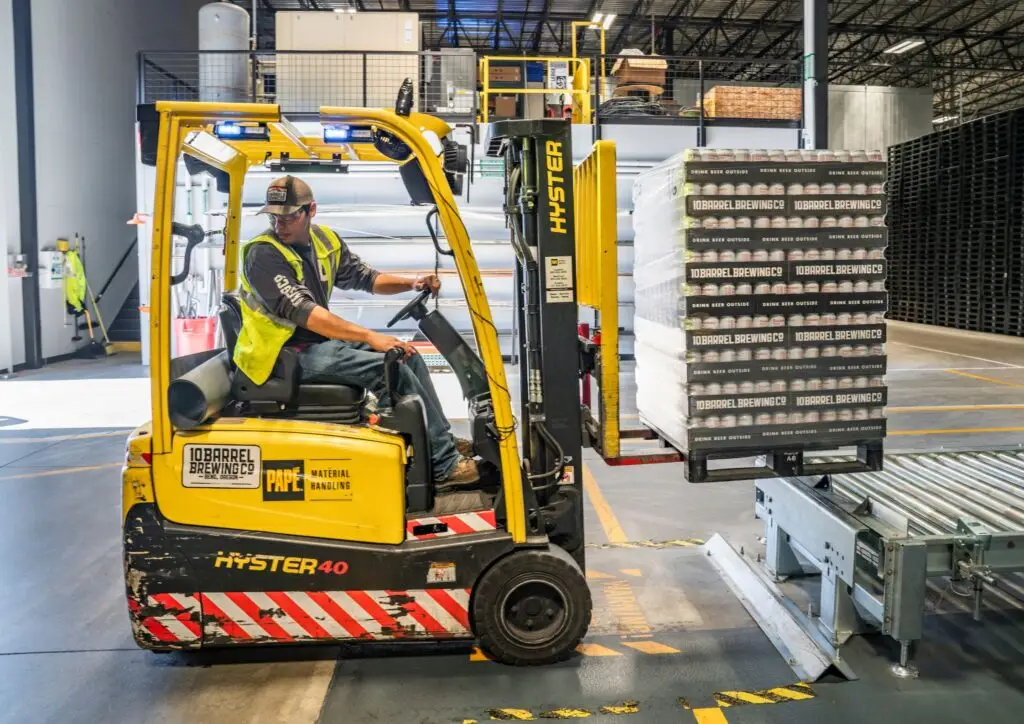
OSHA’s forklift rules are some of the most enforced safety standards in the world. This is mainly because of the prevalence of forklifts in warehouses but also because violations of rules and regulations can often lead to serious accidents and injuries.
For companies, violations can also lead to severe fines and dramatic downtime. Under 29 CFR 1910.178, OSHA (the Occupational Safety and Health Administration) defines how powered industrial trucks (forklifts, lift trucks, pallet jacks, telehandlers, etc.) must be designed, operated, maintained, and how operators must be trained and certified.
This guide reframes these OSHA forklift regulations, so safety managers, supervisors, and business owners can view them as practical tools for reducing risk and improving operations, rather than as a burden.
What Is OSHA 1910.178?
OSHA 29 CFR 1910.178 is the federal standard for powered industrial trucks used in general industrial fields, which includes warehouses, manufacturing plants, distribution centers, retail, and many service environments.
This standard covers most powered trucks that are used to move, lift, stack, or tier materials, no matter if they are electric or internal combustion.
The regulations apply to both sit‑down and stand‑up counterbalance forklifts, reach trucks, order pickers, powered pallet jacks, rough‑terrain forklifts, and telehandlers, among others, but it excludes agricultural operations and most construction sites, which are governed by separate OSHA standards and rules.
Outside the U.S., forklifts and other industrial trucks fall under comparable frameworks. In Germany, for example, DGUV Regulation 70 sets requirements for the safe use of company vehicles, including forklifts and warehouse trucks.
Core OSHA Forklift Regulations: The Three Pillars
OSHA’s forklift standard can generally be divided into three core pillars: operator training, equipment condition, and safe workplace operations. Thinking in these pillars helps align your forklift safety program with the structure that OSHA inspectors use during audits.
- Operator training and certification: Only trained, evaluated, and certified operators may use forklifts, and employers must document this certification.
- Equipment safety and inspections: Forklifts must be in safe operating condition, inspected at least daily, and removed from service when defects are found.
- Safe operating practices: OSHA specifies how forklifts must be driven, loaded, parked, and used around pedestrians and on ramps or docks to prevent tip‑overs and collisions.
While OSHA primarily focuses on operator training and evaluation, many organizations strengthen their forklift safety programs by incorporating fitness for duty examinations for operators working in physically demanding or safety-sensitive roles.
OSHA Forklift Certification Requirements (1910.178(l))
Under 1910.178(l), OSHA requires employers to ensure that each forklift operator is “competent to operate a powered industrial truck safely.” This competence is demonstrated through a specific training, evaluation, and documentation process—not through a “license” issued by OSHA or the state.
Key Certification Requirements
- Age requirement: Operators must be at least 18 years old to operate a forklift in non‑agricultural employment.
- Training content: Training must cover both truck‑related topics (controls, capacity, stability, inspection) and workplace‑related topics (surface conditions, pedestrian traffic, ramp use, loading docks, ventilation, etc.).
- Three‑part training format: Formal instruction (e.g., classroom, e‑learning), practical training (hands‑on, supervised), and an evaluation of performance in the workplace are all required.
- Equipment‑ and site‑specific: Operators must be trained on the exact classes of trucks they will use and the actual hazards in their facility, not just generic forklift theory.
- Supervised trainees only: Trainees may operate forklifts only under direct supervision of a qualified trainer and only when it does not endanger anyone.
Documentation And Recertification
Employers must keep a certification record that includes information such as the operator’s name, training date, evaluation date, and the name of the person(s) who performed the training or evaluation. This record is what OSHA inspectors will request upon their audit; there is no separate OSHA “license.”
A digital asset management software like Timly can centralize these certification records, send reminders before they expire, and make them instantly available during internal audits or OSHA inspections.
Refresher training and re‑evaluation are required at least every three years, or sooner if the operator is involved in an accident, is observed operating unsafely, is assigned to a different type of truck, or when workplace conditions change significantly. These deadlines can also be tracked in a smart training management software.
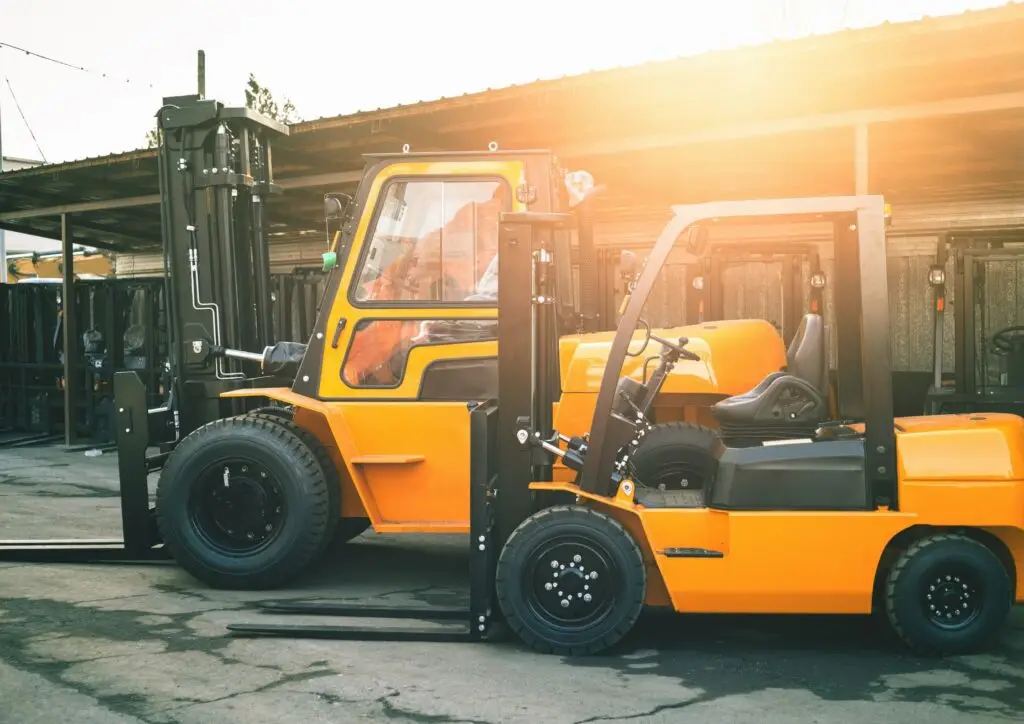
Forklift Training Guidelines For OSHA Compliance
OSHA forklift training guidelines are also performance‑based: OSHA tells companies exactly what outcomes are required but also gives them the flexibility in how they achieve them. For most organizations, an effective program therefore blends standardized content with site‑specific add‑ons.
Required Training Topics
- Truck‑related topics (examples)
- Operating instructions and controls
- Truck capacity, data plate, and stability triangle
- Load handling, stacking, and unstacking
- Steering, braking, and visibility
- Pre‑use inspection procedures and defect reporting
- Workplace‑related topics (examples)
- Surface conditions and floor load limits
- Pedestrian traffic and shared‑use areas
- Ramps, inclines, and dockboards
- Enclosed areas, exhaust and ventilation hazards
- Unique hazards like narrow aisles, drive‑in racks, or cold storage
- Evaluation and hands‑on practice
- Demonstration by the trainer followed by supervised operation by the trainee in the actual work environment.
- Checklists or scoring rubrics are commonly used to document performance.
Forklift Safety Training Best Practices
- Use real‑world incident examples from your facility to make the training tangible.
- Integrate checklists and brief toolbox talks into daily operations so training is reinforced continuously, not just every three years.
- Track attendees, test scores, and evaluation results in a central system so HR, safety managers, and supervisors share one source of truth.
Daily Forklift Inspections And Equipment Rules
OSHA 1910.178 requires that forklifts be examined before being placed in service at the beginning of each shift, and that any truck found to be unsafe be removed from service until repaired. This is a critical part of forklift safety triangle and OSHA compliance, since many serious incidents stem from poor maintenance. If a forklift-related incident results in a fatality, an in-patient hospitalization, an amputation, or the loss of an eye, employers may also need to meet OSHA reporting requirements.
Typical OSHA‑Aligned Daily Forklift Checklist
- Brakes, steering, and horn function correctly
- Hydraulic system intact, with no leaks, and mast chains undamaged
- Tires in good condition and properly inflated if pneumatic
- Forks not cracked, bent, or distorted
- Overhead guard intact and not modified
- Seatbelts present and functional
- Lights, alarms, and other warning devices operating properly
- Nameplate/data plate legible and capacity not exceeded
Even with these controls in place, forklift incidents can still cause serious injury, so warehouses and distribution centers should make sure trained first aiders are on-site during every shift where forklifts operate.
OSHA also prohibits modifications or additions that affect capacity or safe operation (such as adding attachments) unless the manufacturer approves them and the data plate is updated.
Free OSHA Forklift Inspection Checklist PDF
Having a clear written program is one thing—making it easy for operators to follow it on the floor is another. This is where a simple, standardized pre‑shift checklist helps turn OSHA 1910.178 requirements into a daily habit instead of an occasional paperwork exercise.
Use the checklist to document each pre‑operation inspection, catch defects early, and show OSHA or insurers that you are actually enforcing your forklift safety rules in practice.

Forklift Safety Rules For OSHA Compliance
- Preventing injuries is key and should always be the priority.
OSHA forklift safety rules focus heavily on preventing tip‑overs, collisions, and struck‑by incidents involving pedestrians.
Many of the “common‑sense” rules operators hear in training are actually spelled out directly in 1910.178.
Core Operating Rules
- Drive at a safe speed, slow down and sound the horn at blind corners, doorways, and intersections.
- Never allow riders on forks, pallets, or anywhere other than the designated operator’s position.
- Keep loads within the truck’s rated capacity and as low and tilted back as practical for stability.
- Do not turn on ramps or inclines; always travel with the load upgrade on slopes when loaded.
- Maintain clear visibility; if the load blocks the view, travel in reverse or use a spotter when necessary.
- Park only in authorized areas, lower forks to the floor, neutralize controls, set the brake, and turn off power.
Pedestrian And Workplace Controls
- Separate pedestrian walkways from forklift travel paths where possible and mark crossings.
- Use mirrors, warning lights, and audible alarms in high‑traffic or reduced‑visibility areas.
- Enforce seatbelt use to mitigate crushing injuries in the event of a tip‑over.
- Employers should also ensure that operators use appropriate personal protective equipment (PPE) whenever required by the workplace hazard assessment.
OSHA Forklift Rules vs. Training Guidelines At A Glance
| Aspect | OSHA Forklift Rules (1910.178) | Training Guidelines / Best Practice |
|---|---|---|
| Legal status | Mandatory federal standard for powered industrial trucks. | Recommended methods to comply and improve safety. |
| Focus | What must be achieved: safe equipment, operators, operations. | How to achieve it: curricula, formats, tools. |
| Training requirement | Training, evaluation, and certification required. | Use blended learning, tests, and scenarios. |
| Inspection requirement | Pre‑shift examination; remove unsafe trucks from service. | Use standardized checklists and digital logs. |
| Recertification | At least every 3 years or after incidents/changes. | Refresh annually with micro‑training and toolbox talks. |
| Documentation | Operator‑level certification records required. | Centralized LMS or software to track all training. |
Using Digital Tools To Simplify Forklift OSHA Compliance
Many organizations struggle not with the rules themselves, but with keeping training records, inspection checklists, and corrective actions up-to-date, organized, and accessible during audits. Paper forms, spreadsheets, and scattered files make it easy to miss expired certifications or incomplete inspections.
A cloud‑based asset tracking and maintenance management solution like Timly can help by linking each forklift’s asset record with pre‑shift inspection checklists, service history, and documentation, all accessible via QR codes or barcodes on the trucks. Safety teams and HR managers can also store operator certifications and schedule training renewals, making it easier to prove OSHA forklift safety compliance at any time.
Conclusion: Turning OSHA Forklift Regulations Into Everyday Habits
OSHA forklift rules in 29 CFR 1910.178 are detailed, but they ultimately boil down to three things: competent operators, safe equipment, and controlled workplaces. When training, inspections, and operating rules are embedded into daily routines—and supported by clear documentation and modern tooling—forklift safety management becomes a habit rather than a compliance fire‑drill.
By building a structured forklift certification program, enforcing daily inspections, and using digital systems to track training and maintenance, companies can reduce incidents, avoid fines, and create a safer environment for workers and visitors alike.
FAQs About OSHA Forklift Rules
OSHA does not issue licenses; instead, the employer must certify that each operator has successfully completed required training and evaluation, and keep a written certification record.
OSHA requires re‑evaluation at least every three years, and refresher training whenever an operator is involved in an accident, observed operating unsafely, assigned to a different truck type, or workplace conditions change.
If a forklift is found unsafe during pre‑use examination, it must be removed from service until repaired, and only returned to service when it can be operated safely.
Related Articles

OSHA Reporting And Recordkeeping Requirements: Complete Guide
October 12, 2026


Job Hazard Analysis: Requirements, Examples and Digital Tools
May 14, 2026
Environmental Health & Safety (EHS): Definition, Compliance, Regulations, and Best Practices
August 10, 2026
Occupational Health and Safety (OHS): Definition, Key Regulations & Best Practices
August 21, 2025