Workplace Injury Prevention: DGUV Regulations, Risk Assessments, and Occupational Safety
From insight to action – get to know Timly now!

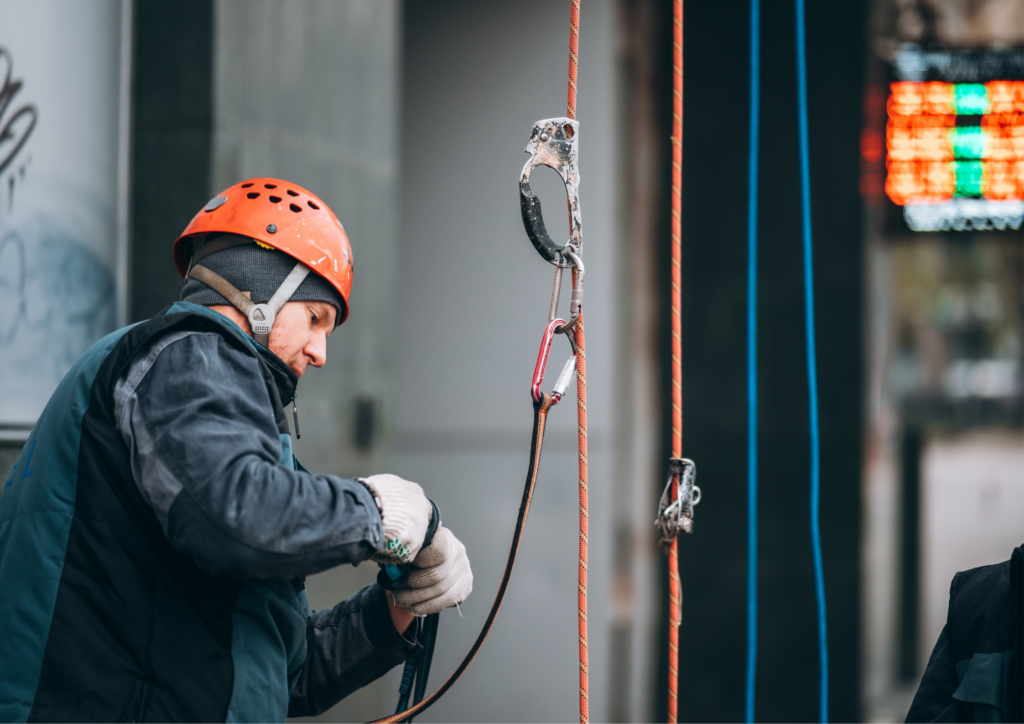
Workplace injury prevention is a core responsibility for employers. In Germany especially, this topic has continued to gain importance. There, DGUV regulations provide the binding framework for occupational safety and explain how organizations must prevent workplace accidents, occupational diseases, and work-related health hazards effectively.
Because these requirements are autonomous statutory rules within Germany’s social accident insurance system, they apply across industries to almost all employers and insured employees. This makes clear that workplace injury prevention is not optional. It is a legal and operational duty that affects warehouses, production facilities, construction sites, offices, field-service operations, and every other work environment.
For international companies, understanding the DGUV definition is particularly important because of its worldwide implications and impact. But DGUV rules are specific to Germany’s statutory accident insurance system and should not be treated as direct equivalents of U.S. OSHA rules. However, their underlying purpose is definitely familiar: systematic accident prevention in the workplace through risk assessment, safe work equipment, employee training, inspections, documentation, and continuous improvement.
What Is DGUV?
So, what is DGUV? DGUV stands for Deutsche Gesetzliche Unfallversicherung, or German Social Accident Insurance. It is the umbrella organization for Germany’s commercial employers’ liability insurance associations and public-sector accident insurance funds.
The German Social Accident Insurance system is one of the mandatory branches of German social security. It protects employees and other insured groups during work, education, and certain related activities. Employers or the state fund the system rather than the insured individuals themselves. Its responsibilities include prevention, rehabilitation, and compensation following occupational accidents or diseases.
A practical DGUV definition therefore includes more than an insurance body. DGUV develops and coordinates regulations, rules, information documents, and principles that create a consistent framework for workplace injury prevention and occupational health and safety protection in Germany.
Together with the responsible accident insurance institutions, DGUV translates state occupational safety requirements, scientific knowledge, and operational realities into practical requirements. These requirements matter in warehouses, production environments, offices, workshops, logistics operations, and mobile work settings alike.
For companies, the answer to “what is DGUV?” is straightforward: DGUV is a central part of the German occupational safety system and a key source of accident prevention in the workplace requirements. It should always be taken into consideration when looking at ways to enhance workplace injury prevention.
DGUV Regulations at a Glance
- DGUV regulations are legally binding accident prevention regulations.
German Social Accident Insurance Institutions issue them as autonomous statutory law, with their legal basis in Section 15 of Book VII of the German Social Code. DGUV rules, information documents, and principles support employers and insured persons in fulfilling the obligations created by these binding regulations.
The regulations supplement state laws and ordinances with detailed requirements, many of which are industry-specific. They apply directly to employers and insured persons. Failure to comply can lead to enforcement measures, fines, recourse claims, civil liability exposure, or criminal consequences in serious cases.
The most important DGUV regulations for workplace injury prevention include the following:
- DGUV Regulation 1, “Principles of Prevention”: This regulation establishes fundamental duties for employers and insured employees to prevent occupational accidents, occupational diseases, and health hazards. It forms a key basis for risk assessments and the organization of occupational safety. An official English version is available as “Principles of Prevention,” although the German original remains legally binding.
- DGUV Regulation 3 and DGUV Regulation 4, “Electrical Installations and Equipment”: These regulations govern the inspection, operation, and maintenance of electrical installations and work equipment. Their purpose is to prevent electric shock incidents and fire hazards. They are particularly relevant to industrial operations, skilled trades, warehouse technology, workshops, and office workstations with electrical equipment.
- DGUV Regulation 52, “Cranes”: This regulation contains specific safety requirements for the installation, operation, maintenance, and inspection of cranes. It is especially important in production, logistics, manufacturing, and construction environments.
- DGUV Regulation 70, “Vehicles”: This regulation defines requirements for the safe use of company vehicles. It can cover warehouse vehicles, forklifts and other industrial trucks, trucks, vans, and service vehicles used by field personnel.
For warehouse and production operations, DGUV Regulations 1, 3, 52, and 70 play a particularly central role in workplace injury prevention. In office settings, the focus is typically on general prevention requirements, electrical safety, ergonomic workstation design, fire protection organization, and psychological health.
Regular inspections, employee instruction, maintenance activities, and a systematic risk assessment make it easier to integrate these requirements into everyday operations. This structured approach helps organizations reduce workplace injuries while also creating more reliable processes.

DGUV Regulations vs. DGUV Rules
There is a clear distinction between DGUV regulations and DGUV rules.
- DGUV regulations are legally binding. They define the duties and minimum requirements that employers must meet.
- DGUV rules, by contrast, are recognized implementation aids. They are not formally binding in the same way, but they explain how employers can implement legal requirements in a practical, efficient, and legally robust manner.
A typical example is the relationship between DGUV Regulation 1, “Principles of Prevention,” and DGUV Rule 100-001, also called “Principles of Prevention.” DGUV Regulation 1 establishes obligations such as the requirement to conduct risk assessments and provide employee instruction. DGUV Rule 100-001 explains how to identify hazards systematically, assess risks, define protective measures, implement those measures, verify their effectiveness, and keep the risk assessment current.
Companies that follow DGUV rules can generally assume that they are applying recognized approaches that meet the intent of the relevant DGUV regulations and the expected state of the art.
This is particularly valuable for small and medium-sized companies without a large internal occupational safety department. DGUV rules turn complex legal requirements into operational processes, including checklists, examples, training procedures, inspection routines, and implementation guidance.
Still, employers should remember that DGUV regulations remain the decisive legal benchmark. Supervisory authorities, accident insurance institutions, and courts may use the binding regulations when assessing whether an organization has met its workplace injury prevention obligations.
DGUV Risk Assessment
The DGUV risk and safety assessment, known in German as a Gefährdungsbeurteilung, is the central process in preventive occupational safety. Under Section 5 of the German Occupational Safety and Health Act and the applicable DGUV requirements, employers must systematically identify hazards, assess risks, and establish appropriate protective measures.
DGUV Rule 100-001 specifies the established process. It includes defining work areas and activities, identifying hazards, evaluating risks, planning safety measures, implementing those measures, reviewing their effectiveness, and updating the assessment when necessary.
For warehouses, production facilities, and office environments, a DGUV risk assessment means reviewing every relevant source of danger in a structured way. This can include:
- Fall hazards, crush hazards, collision risks, and unsafe traffic routes.
- Noise, vibration, dust, hazardous substances, and thermal exposure.
- Electrical hazards involving machinery, charging stations, cables, tools, or office equipment.
- Ergonomic strain caused by lifting, repetitive movements, poor workstation layouts, or prolonged screen work.
- Psychological stress, including excessive workloads, unclear responsibilities, conflict, or insufficient recovery time.
- Risks related to work equipment, ladders, cranes, forklifts, vehicles, shelving systems, and personal protective equipment.
A risk assessment is not a one-time document. It must be treated as an ongoing process. When work processes, equipment, facilities, materials, technology, responsibilities, or organizational structures change, the organization must review and update the assessment.
This continuous approach is essential for accident prevention in the workplace. A risk assessment that is current, complete, and connected to real operations helps employers identify issues before they develop into injuries, equipment failures, or operational interruptions.
A careful DGUV risk assessment is also essential from a compliance perspective. It provides the basis for employee instruction, work instructions, inspection intervals, maintenance plans, and the selection of personal protective equipment. It also serves as central documentation that can demonstrate compliance with DGUV regulations and DGUV rules to accident insurance institutions and supervisory authorities.
DGUV Fall Protection
DGUV fall protection is a particularly important area of workplace injury prevention because falls regularly cause severe and sometimes fatal accidents. For this reason, fall hazards are addressed explicitly in several DGUV regulations and information documents.
Important references include DGUV Regulation 38, “Construction Work,” DGUV Regulation 85 for personnel lifting equipment, and DGUV Information 201-056, which addresses protective measures against falls from roofs.
The DGUV guidance on roof work explains how roof areas should be classified according to their use and fall risk. It also outlines the technical, organizational, and personal protective measures required in different situations.
Relevant protective measures can include guardrails, collective fall-protection systems, anchorage points, fall-arrest systems, safe access routes such as stairs and fixed access systems, as well as the protection of skylights and roof areas that are not safe to walk on.
The central principle of DGUV fall protection is the hierarchy of controls. Employers should first prioritize collective safeguards, such as guardrails, side protection, barriers, or protected work platforms. Personal fall-arrest equipment should be considered only after collective solutions have been assessed and found insufficient or impractical.
For organizations, this means planning for accident prevention in the workplace as early as possible. When constructing or redesigning buildings, production areas, storage systems, mezzanines, roof installations, and maintenance access routes, DGUV fall-protection requirements and general construction industry safety measures should be incorporated into the design phase. This helps reduce workplace injuries, avoids costly retrofits, and improves safety from the first day of operation.
DGUV V3 and V4 Inspection Duties
DGUV requirements also include concrete inspection obligations. Among the best-known are DGUV V3 and DGUV V4, which require periodic inspection of electrical installations and electrical work equipment in commercial and public-sector environments.
The inspection intervals depend on the type of equipment, its environment of use, the level of risk, and the results of previous inspections. Electrical equipment used in demanding environments, such as workshops, production floors, construction sites, or warehouses, may require more frequent inspection than equipment used in lower-risk office settings.
After an inspection has been completed correctly, organizations should create a test report and apply an inspection label or other clear status identification. The documentation must make it possible to identify the equipment, understand the inspection result, confirm the responsible inspector, and determine the next required inspection date.
Ladder inspections are another relevant example of accident prevention in the workplace. Ladders should receive a visual check before each use and a more extensive recurring inspection, typically performed annually or according to the company’s risk assessment and usage conditions. Only a qualified person may conduct the formal inspection.
Documentation and clear identification are essential in this context as well. When employees can immediately see whether a ladder, electrical device, forklift, crane, or other work item is approved for use, the organization strengthens workplace injury prevention at the point where it matters most: directly before work begins.
“What we hear from companies again and again is that the inspection itself was never really the problem. It's everything around it: reminders, records, proof of compliance. That's precisely where Timly comes in: saving real time without letting safety take a back seat.“
Mehmeti
Timly Software AG

Why DGUV Matters to Businesses
DGUV requirements are a practical management framework for protecting employees and organizing reliable operations. Organizations that actively use DGUV regulations and rules can reduce workplace injuries, unplanned downtime, follow-on costs, and operational uncertainty.
A strong workplace injury prevention system also supports employee confidence, motivation, and employer attractiveness. People are more likely to work safely and productively when equipment is maintained, responsibilities are clear, hazards are addressed, and safety procedures are part of normal everyday work.
From a legal perspective, DGUV regulations and DGUV rules help employers reduce liability risk. Organizations that systematically implement requirements, document risk assessments, perform inspections on time, and retain evidence of employee instruction are in a better position to demonstrate that their occupational safety organization meets recognized standards.
Complete and tamper-resistant documentation of safety measures, inspection reports, maintenance records, and training confirmations is particularly important. In the event of an accident, organizations must often show not only that a rule existed, but also that it was implemented, monitored, and documented in practice.
DGUV requirements prove useful across all operational areas:
- In warehouses, they support the safe use of forklifts and industrial trucks, clear traffic routes, coordinated storage equipment, secure shelving systems, and effective fall protection.
- In production environments, they help companies operate machinery, cranes, electrical installations, hazardous substances, and work equipment safely. They also provide a structure for organizing inspection intervals and maintenance activities.
- In offices, they support ergonomic workstation design, electrical safety, fire protection procedures, employee instruction, and psychological health measures.
Digital asset management systems, inspection software, and maintenance platforms can make it easier to meet requirements arising from DGUV regulations, DGUV rules, DGUV risk assessments, and DGUV fall protection obligations. These tools can provide transparent inspection schedules, digital reports, centralized documentation, and automated reminders.
As a result, compliance does not have to become a bureaucratic obstacle. Instead, it can become an integrated part of a modern, safe, and efficient operational structure.

How Digital Tools Improve Workplace Injury Prevention
Various software solutions are available to improve and support workplace injury prevention. One example is Timly’s maintenance management software. Its comprehensive asset-management approach allows organizations to record company inventory consistently, regardless of whether the assets are furniture, vehicles, tools, machinery, IT hardware, ladders, electrical equipment, or safety-critical work equipment.
Every asset can have its relevant attributes stored in its profile. Each inventory item receives a digital asset file and an individual calendar. The asset file can store all required documentation, from operating manuals and certificates to risk-assessment information, checklists, maintenance documentation, and inspection records.
Reports from safety inspections can also be stored in real time. This creates a central and traceable record for each individual asset and supports accident prevention in the workplace by giving responsible employees access to the information they need.
Inspection intervals and other deadlines can be managed in the calendar. As a result, maintenance appointments, safety inspections, recurring checks, and required reviews can be organized systematically. Responsible employees receive timely reminders, for example by email, before a deadline is missed.
A maintenance calendar also provides a clear overview for individual work areas, locations, departments, or asset categories. This helps facility managers, safety managers, workshop teams, and department leaders coordinate their responsibilities more effectively.
Employees, inspection personnel, and responsible managers can access the information through a smartphone app or a web browser on a computer. This makes it possible to verify the proper condition and current inspection status of work equipment directly on site.
At the same time, administrators and workshop teams gain a simple overview of upcoming appointments, overdue inspections, and completed safety activities. Digital transparency makes it easier to reduce workplace injuries because safety-related information is available when and where employees need it.
Workplace Injury Prevention With DGUV as a Foundation
Compliance with DGUV regulations is mandatory for companies operating within their scope in Germany. At the same time, following these requirements supports compliance and continuous improvement in workplace injury prevention.
Because DGUV rules and information documents are designed to reflect current technical and occupational safety knowledge, they provide a valuable operational guide for employers, safety officers, supervisors, and responsible employees. Regulations can still create administrative challenges, especially when an organization manages many locations, assets, inspection intervals, and training obligations.
For this reason, it makes sense to use digital tools such as Timly. These tools can help organizations integrate DGUV regulations, DGUV rules, safety documentation, and inspection routines into day-to-day operations.
For example, a checklist can be stored directly in an equipment profile. A responsible person can use the checklist on a smartphone while inspecting a ladder, a forklift, a power tool, a crane, or another work item. The inspection result, attached photos, completed checklist, and next scheduled review can all remain connected to the same digital asset file.
Deadlines are less likely to be overlooked, and transparency improves across the organization. Every authorized person can access the complete safety status of individual work equipment, including its last inspection, current documentation, responsible person, and upcoming maintenance date.
Both employees and responsible managers benefit from this clarity. It strengthens accident prevention in the workplace, helps reduce workplace injuries, and supports a safer operating environment across the entire company.
FAQs About Workplace Injury Prevention
DGUV stands for Deutsche Gesetzliche Unfallversicherung, or German Social Accident Insurance. It is the umbrella organization for Germany’s commercial employers’ liability insurance associations and public-sector accident insurance funds. In addition to insurance-related responsibilities, DGUV develops regulations, rules, and guidance that support workplace injury prevention, occupational safety, rehabilitation, and compensation.
DGUV regulations are legally binding accident prevention regulations. DGUV rules are practical implementation aids that explain how employers can meet the binding requirements in a recognized and systematic way. DGUV Rule 100-001, for example, explains and specifies DGUV Regulation 1, “Principles of Prevention.”
DGUV requirements apply broadly to employers and insured persons within Germany’s statutory accident insurance system. The specific accident insurance institution and applicable requirements can vary by industry, organization type, and operational activity. Employers should therefore verify which DGUV regulations apply to their company, locations, equipment, and employees.
Companies can reduce workplace injuries by conducting and regularly updating risk assessments, maintaining work equipment, performing required inspections, providing documented employee instruction, establishing clear safety procedures, and addressing hazards before incidents occur. Digital systems can support this process by managing inspection schedules, asset records, maintenance activities, and safety documentation centrally.
Documentation demonstrates that safety obligations were not only identified but also implemented. Risk assessments, inspection reports, maintenance records, employee training confirmations, and work instructions provide evidence of an organization’s workplace injury prevention activities. Central digital documentation also makes it easier to prepare for audits, prevent missed deadlines, and respond quickly after an incident.
Related Articles

Occupational Health Assessment: A Guide to Fitness for Duty Examinations
July 13, 2026
Occupational Health and Safety (OHS): Definition, Key Regulations & Best Practices
August 21, 2025

Formal Safety Assessment: Risk Management Definition, Process, and Practical Examples
June 22, 2026
Environmental Health & Safety (EHS): Definition, Compliance, Regulations, and Best Practices
August 10, 2026
Health and Safety at Work Act: Key Requirements, Employer Duties, and Compliance
October 12, 2025