Electrical Repair and Industrial Electrical Maintenance: A Practical Guide
From insight to action – get to know Timly now!

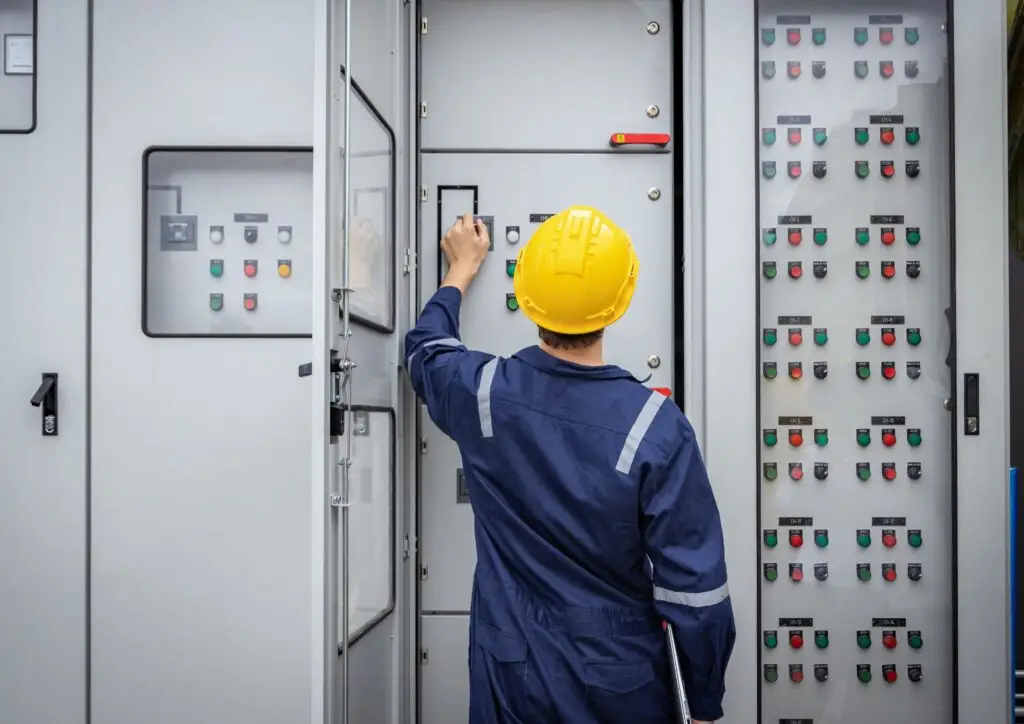
Electrical repair is critical to keep industrial and commercial installations operating safely and efficiently when something goes wrong. A professional approach to electrical repair, combined with structured electrical maintenance, reduces unplanned downtime, limits damage to equipment and helps companies comply with regulations.
This guide focuses on electrical repair in the context of industrial electrical maintenance for manufacturing plants, warehouses and facilities, as well as commercial electrical maintenance for offices and other business premises. It explains what electrical maintenance is, how electrical repair fits into the broader strategy, which types of maintenance exist, how to design an electrical maintenance plan, which electrical tests are essential and which legal aspects companies should consider.
What Is Electrical Maintenance and How Does It Relate to Electrical Repair?
Electrical maintenance covers all technical activities aimed at keeping panels, wiring, motors, transformers, protection systems and other electrical equipment in good working condition.
It includes visual inspections, measurements, cleaning, adjustments, replacement of components and, when necessary, targeted electrical repair to fix faults and other issues.
The key difference to electrical repair is that electrical maintenance is proactive and planned, while electrical repair is reactive and performed after a problem appears. A modern industrial electrical maintenance program combines routine maintenance with fast, well‑organized electrical repair workflows to restore operation quickly when equipment, machines, or tools fail.
In practice, electrical maintenance also covers commercial electrical maintenance in offices, retail, healthcare and public buildings. In all of these environments, electrical repair must be coordinated with operations to minimize disruption and ensure safety simultaneously. Most examples in this guide refer to low and medium voltage systems, which are typical for both industrial and commercial sites; high‑voltage systems are subject to stricter rules and usually require specialized electrical repair and maintenance contractors.
When planning electrical construction and maintenance projects for new facilities or major upgrades, it is smart to design with future electrical repair already in mind. Clear labeling, good access and standardized components make troubleshooting and repair work faster and safer over the entire lifecycle.

Types of Maintenance Around Electrical Repair
Smart companies rarely rely on a single approach regarding their maintenance tasks. In day‑to‑day operations, electrical repair sits alongside different types of industrial electrical maintenance, depending on asset criticality, risk appetite and budget. The three main approaches are preventive electrical maintenance, corrective electrical maintenance and predictive electrical maintenance.
Preventive Electrical Maintenance
Electrical preventive maintenance is based on planned interventions at defined intervals (calendar time, operating hours, cycles and similar) to avoid failures and reduce the need for urgent electrical repair. Typical preventive tasks include:
- Visual inspection of panels, cables and connections to detect discoloration, damage or overheating before they cause a breakdown.
- Cleaning of components to avoid dust and dirt that can lead to insulation problems or overheating requiring electrical repair.
- Tightening of terminals and connections to prevent hot spots and excessive contact resistance.
- Basic verification of protective devices and switching equipment to ensure they operate as expected.
The main goal of electrical preventive maintenance is to reduce failure probability, while improving safety and keeping performance stable. In industrial electrical maintenance, this is crucial for motors, control panels, lighting circuits and power distribution that directly affect production efficiency. In commercial electrical maintenance, preventive tasks focus on emergency lighting, UPS, HVAC feeds and life‑safety circuits to avoid disruptive electrical repair events during business hours.
By investing in electrical preventive maintenance, companies can significantly decrease the number of unexpected electrical repair interventions and plan repairs during scheduled shutdowns instead of in the middle of a shift.
Corrective Electrical Maintenance
Corrective maintenance is the classic electrical repair scenario: a failure has already occurred and the priority is to restore normal operation. Corrective electrical repair can include anything from replacing a circuit breaker that trips repeatedly, to rewinding a motor, fixing damaged cabling, or troubleshooting a faulty transformer.
Some level of corrective electrical repair is inevitable, because not every problem can be predicted. However, relying mainly on corrective electrical repair leads to:
- Higher direct costs for emergency call‑outs and parts
- Unpredictable downtime in production or service delivery
- Increased safety risks when equipment fails unexpectedly
- For this reason, mature industrial electrical maintenance strategies try to make corrective electrical repair the exception. Preventive and predictive measures are used to catch issues early, while repair teams are kept ready for fast, structured response when something still goes wrong.
In commercial electrical maintenance, corrective electrical repair is often triggered by tenant complaints, power losses, nuisance tripping or safety issues. Here, clear communication, documentation and quick resolution are essential to protect reputation and avoid business interruptions.
Predictive Electrical Maintenance
Predictive maintenance relies on monitoring key parameters (temperature, vibration, current, power quality and others) to intervene just before failure. When predictive tools detect anomalies, companies can schedule electrical repair at the right time instead of waiting for a full breakdown.
In industrial electrical maintenance, common predictive techniques include:
- Infrared thermography to locate hot spots in panels, busbars and terminations.
- Vibration analysis on motors and rotating equipment to identify mechanical or electrical issues early.
- Continuous measurement of current, voltage and harmonics on critical feeders and large loads.
Predictive strategies require more instrumentation and data analysis than basic electrical preventive maintenance, but they help reduce both the frequency and severity of emergency electrical repair events. In modern electrical construction and maintenance projects, sensors and communication modules are built into the design to enable predictive monitoring from day one.
Over time, the ideal mix is a layered approach: electrical preventive maintenance to keep systems healthy, predictive technologies to spot emerging problems, and well‑organized electrical repair capabilities when faults still occur.
Benefits of Focusing on Electrical Repair and Maintenance
A robust combination of electrical repair, electrical maintenance, and industrial electrical maintenance brings clear operational and financial benefits.
Key advantages include:
- Less overall downtime: preventive tasks and predictive monitoring reduce the number of failures, while fast electrical repair minimizes the duration of unavoidable outages.
- Higher safety: regular inspections and timely electrical repair lower the risk of short circuits, fires and electric shocks.
- Longer equipment life: motors, transformers, switchgear and panels last longer when issues are detected early and corrected through quality electrical repair instead of running to failure.
- Lower total cost: well‑planned electrical preventive maintenance and targeted electrical repair are generally less expensive than frequent emergency call‑outs and large component replacements after catastrophic failure.
- Improved energy efficiency: good contacts, balanced phases and well‑maintained motors reduce energy losses and overheating.
- Better compliance: structured industrial electrical maintenance and commercial electrical maintenance programs make it easier to prove that installations meet applicable codes and safety requirements.
For service providers active in electrical construction and maintenance, offering bundled electrical repair and maintenance contracts is also a strong differentiator. Customers benefit from a single partner who knows the installation from design through construction, preventive care and repair.
Electrical Maintenance Plan: Integrating Electrical Repair
An electrical maintenance plan defines what is done, when, how and by whom. When electrical repair is the main focus, the plan should still include preventive and predictive elements so repair work becomes more predictable and less disruptive.
A practical sequence of steps to build an electrical maintenance and electrical repair plan is:
| Step | Description | Main Goal |
|---|---|---|
| 1. Inventory and criticality | Record all electrical assets and identify those whose failure would cause major safety or production problems. | Focus electrical repair and maintenance resources where it matters most. |
| 2. Define strategies | Decide for each asset how to combine electrical preventive maintenance, predictive techniques and corrective electrical repair. | Align effort and response time with failure impact. |
| 3. Schedule tasks | Set frequencies for inspections, tests and servicing, and define how quickly electrical repair must start for different failure types. | Avoid oversights and ensure both routine maintenance and rapid repair. |
| 4. Standardize procedures | Document checklists, safety rules (e.g., lockout/tagout), repair workflows and acceptance criteria after electrical repair. | Ensure safe, consistent work and clear quality standards. |
| 5. Record and analyze data | Store the history of failures, electrical repair actions, downtime and maintenance work in a central system. | Find root causes, improve the plan and reduce repeat failures. |
When a failure occurs, technicians should log the electrical repair in enough detail to understand what caused the issue, how it was fixed and what can be done to avoid similar problems. Over time, this data supports better industrial electrical maintenance decisions, helps optimize spare‑parts stock and guides improvements in electrical construction and maintenance for future projects.
Fundamental Electrical Tests That Reduce Repair Needs
Continuous electrical tests provide objective information about the condition of electrical equipment and can significantly reduce emergency electrical repair events. They are a core part of both industrial electrical maintenance and commercial electrical maintenance.
Key tests include:
- Insulation resistance measurement: detects degradation in cables, motors and transformers before they fail and require major electrical repair.
- Grounding and protective conductor continuity testing: ensures fault currents are safely carried and protective devices can operate correctly.
- Protection device testing and trip verification: confirms that circuit breakers, residual‑current devices and relays trip as designed during faults, limiting the damage electrical repair must address.
- Infrared thermography: identifies hot spots caused by loose connections, overloads or imbalance without shutting down the installation.
These tests are often scheduled as part of electrical preventive maintenance programs. When test results show a trend toward failure, electrical repair can be planned proactively. Documentation of test results also helps repair technicians during diagnostics, speeding up electrical repair and improving quality.

Regulations and Legal Aspects of Electrical Repair
Regulations for electrical repair, electrical maintenance, and electrical construction and maintenance vary by country and region, but some principles are common:
- Electrical work, including electrical repair, must be carried out by qualified and authorized personnel using appropriate personal protective equipment (PPE) where required..
- Electrical installations must be kept in safe working condition through regular inspections and industrial electrical maintenance or commercial electrical maintenance as applicable.
- Certain facility types (public venues, hospitals, high‑rise buildings, hazardous industries) are subject to periodic inspections by independent bodies.
- Significant modifications, extensions or major electrical repair activities often require documentation, testing and sometimes approval under local electrical codes.
Because local requirements differ, companies should always refer to their national or regional electrical code and consult certified professionals.
Working with experienced electrical construction and maintenance partners helps ensure that both new installations and electrical repair work are compliant, documented and auditable.
Digital Tools to Manage Electrical Repair and Maintenance
Digital tools such as CMMS platforms are increasingly used to manage electrical repair and ongoing industrial electrical maintenance and commercial electrical maintenance activities. They help coordinate work, avoid missed tasks and give transparency over costs and asset health.
A specialized system for electrical assets allows companies to:
- Register equipment and maintain a complete history of failures, inspections and electrical repair interventions.
- Schedule electrical preventive maintenance and automatically generate work orders.
- Track repair times, spare‑part consumption and costs related to electrical repair and maintenance.
- Attach diagrams, manuals, test reports and photos directly to each asset.
Timly, for example, offers structured inventory and lifecycle management for tools, machines and electrical equipment. With Timly’s maintenance management software, industrial and commercial operators can:
- Plan and document industrial electrical maintenance and electrical repair tasks.
- Ensure that electrical preventive maintenance is carried out on time.
- Use real‑time data to decide whether repairing or replacing a piece of equipment is more economical.
- By treating electrical repair data as a strategic resource, companies can identify patterns, react faster to recurring issues and improve future electrical construction and maintenance decisions.
Conclusion
Electrical repair is at the heart of keeping electrical systems running when faults occur, but it is most effective when embedded in a broader electrical maintenance strategy.
Combining fast, high‑quality electrical repair with electrical preventive maintenance, predictive monitoring and a structured electrical maintenance plan helps companies reduce downtime, improve safety and control costs.
For both industrial maintenance and commercial electrical maintenance, success depends on qualified personnel, clear procedures, proper testing and the smart use of digital tools. When all these elements work together, electrical repair stops being a constant emergency and becomes a controlled, data‑driven part of a reliable operations strategy.
FAQs About Electrical Repair
The ideal frequency depends on the type of facility, environment and how critical your electrical loads are. In many industrial plants, basic inspections and tests are done monthly or quarterly, with more extensive industrial electrical maintenance at least once a year.
In offices and commercial buildings, a structured commercial electrical maintenance schedule with annual checks and targeted interim inspections can significantly reduce unplanned electrical repair needs.
You should request emergency electrical repair immediately if you notice frequent breaker trips, visible sparks, hot smells like burning insulation, smoke, hot panels, or flickering lights that you cannot explain. These symptoms indicate potential safety hazards that cannot wait for routine electrical preventive maintenance and must be handled by a qualified electrician as soon as possible.
Electrical maintenance is a planned, proactive process that includes inspections, testing, cleaning and adjustments to keep systems in good condition. Electrical repair is reactive and focuses on fixing specific faults once they have already occurred.
A strong program for electrical preventive maintenance lowers the number of emergency electrical repair situations, but both are essential parts of a complete industrial electrical maintenance or commercial electrical maintenance strategy.
In electrical construction and maintenance projects, most work is done at the design, installation and commissioning stages. However, planning for future electrical repair is just as important: using standardized components, providing clear labeling and leaving enough space in panels simplifies troubleshooting and repair later.
Many service providers offer lifecycle packages that combine new installations with ongoing electrical maintenance and fast electrical repair support.
Yes. When you invest in structured electrical preventive maintenance and regular testing, you catch defects early—before they escalate into major failures that require complex electrical repair or full equipment replacement. In practice, this usually means fewer emergency call‑outs, shorter repair times and a longer lifetime for critical assets, all of which lower your overall spend on electrical repair and industrial electrical maintenance.
Related Articles

Industrial Maintenance: Definition, Types, Benefits & Best Practices
July 21, 2026
Industrial Internet of Things (IIoT): Definition, Examples, and Industry Applications
October 10, 2025
Electrical Installation Condition Report (EICR): Requirements, Process, and Compliance
September 17, 2025
Electrical Equipment Safety Regulations 2016: A Complete Guide
September 1, 2025

NFPA 70B: Complete Guide to Electrical Equipment Maintenance & Compliance
August 11, 2026