Restaurant Inventory Management: Process, Free Template, and Tips
From insight to action – get to know Timly now!

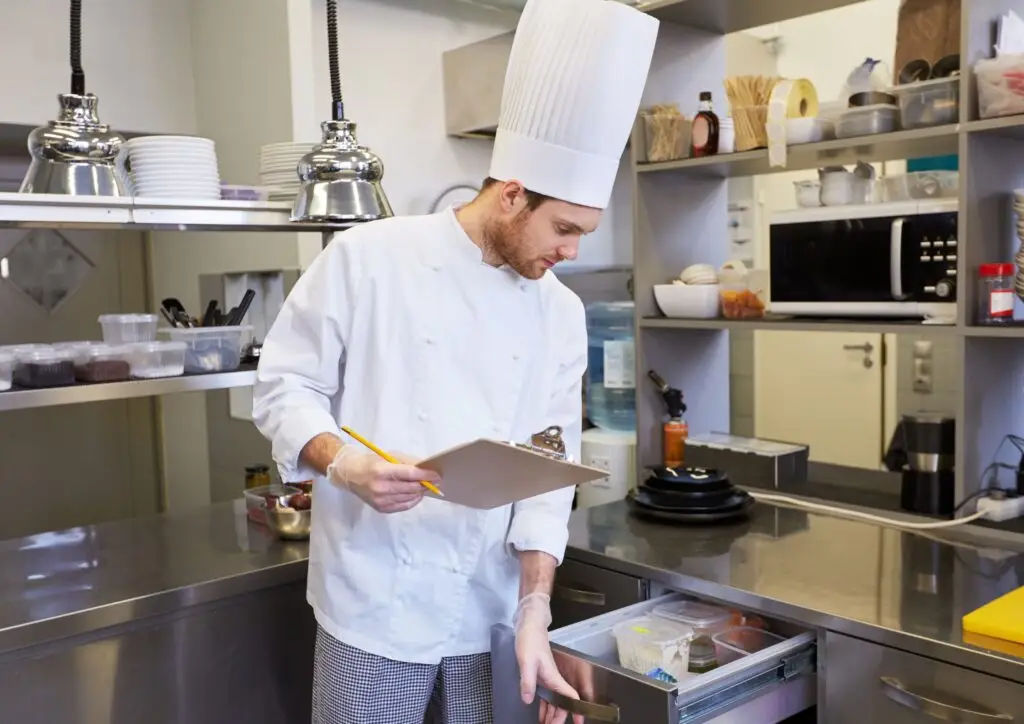
Restaurant inventory management is not only about taking an annual count of equipment, supplies, and stock. For many businesses, taking inventory is legally required as part of accounting and financial reporting obligations. In addition, accurate inventory results also provide valuable data about furniture, work materials, food, beverages, and other assets. This helps with topics such as cost control, purchasing decisions, and the coordination of food and beverage usage.
That is why many restaurant owners, hotels, caterers, and hospitality businesses actively choose to carry out a thorough inventory, even when they are not legally required to do so. The advantages are clear: better transparency, faster detection of losses and shrinkage, and a reliable data basis for any operational decisions.
In this guide, we explain what restaurant operators should pay attention to when carrying out an inventory and which industry-specific requirements apply. We also look at the advantages of digital inventory tracking for restaurants, which simplifies continuous stock management and reduces the time and effort involved throughout the year.
What Is Restaurant Inventory Management?
Restaurant inventory management includes the complete recording of all existing stock and assets in any kind of hospitality business. This does not only apply to supplies such as food and beverages, but also to non-food items such as dishes, kitchen equipment, utensils, furniture, and operating materials.
The actual inventory can be carried out physically, for example by counting, weighing, or measuring items, but it can also be carried out based on records, for example regarding receivables, liabilities, licenses, or other non-physical assets. In practice, restaurants usually rely on a combination of both physical counts and digital or spreadsheet-based documentation.
For U.S. restaurants, stocktaking also plays an important role in tax reporting, accounting, and cost-of-goods-sold calculations. If food, beverages, or other merchandise are an income-producing factor, businesses generally need to track inventory values at the beginning and end of the tax year to determine cost of goods sold. Exact requirements can vary depending on the business structure, accounting method, state rules, and whether the company qualifies for small-business accounting simplifications.
That is why restaurants should coordinate their inventory process with their accountant or tax advisor, even if they manage their day-to-day restaurant inventory management internally.
Why Restaurants Need Accurate Inventory Tracking
Because a complete inventory can include supplies, open receivables, investments, equipment, and other business assets, it shows how the financial position of a business develops over time. For example, by keeping track of all numbers, restaurant owners can easily compare whether investments in new kitchen equipment, dining room furniture, or additional storage capacity have actually contributed to higher revenue or better efficiency.
This is especially important in restaurants because food and beverages are purchased, prepared, sold, and consumed in very short cycles. Without accurate inventory tracking for restaurants, it may not be obvious when the amount of purchased raw materials no longer matches the revenue generated from the menu. Possible reasons include inefficient use of ingredients, spoilage, incorrect portioning, waste, undocumented transfers, inaccurate supplier deliveries, or theft.
Based on reliable inventory data, restaurant managers can optimize purchasing, adapt menus, reduce waste, and improve margins. A structured inventory control for restaurants also supports accountability because stock movements become easier to trace. This transparency can have a preventive effect when it comes to shrinkage or unauthorized removal of goods.

Restaurant Inventory Process: Step-By-Step Guide
In principle, performing a restaurant stocktake follows the same general pattern as stocktakes in other industries. However, because many restaurants perform a full physical count only once a year, it is important to define the process clearly in advance. One reason is comparability: if counts, categories, valuation methods, and responsibilities change every year, the results become harder to evaluate.
A defined restaurant inventory management process gives employees clear instructions and reduces misunderstandings. It also helps ensure that stock levels, item values, and inventory lists can be reviewed consistently after the count.
A structured plan is particularly important in hospitality. Restaurants, hotels, and catering businesses often have limited time windows, high staff workloads, and many perishable items that must be handled carefully.
The inventory process can be divided into the following steps:
Set the Inventory Date
In many businesses, the annual inventory is carried out at the end of the fiscal year. In restaurants, however, the holiday season is often one of the busiest and highest-revenue periods of the year. For this reason, it may be more practical to schedule the inventory in January or even later, depending on accounting requirements and internal processes.
In contrast, hotels may benefit from an earlier inventory date, for example during a quieter period before peak holiday travel. For U.S. businesses, the exact timing should be coordinated with the tax advisor, accountant, or finance team because fiscal years, tax treatment, and reporting needs can vary.
Define the Schedule and Staffing
Depending on the size of the business, the stocktake may take several hours or several days. In hospitality, it is therefore usually best to conduct the count outside regular business hours. Rest days, closing days, seasonal breaks, or planned operating pauses are often suitable.
Hiring temporary staff can speed up the process, but only if they are properly trained. Since accuracy is more important than speed, everyone involved should understand how to count, weigh, measure, document, and flag unclear items.
Assign Teams and Responsibilities
Many restaurants find it useful to form teams of two people: one person counts and the other records the result. Each team should then receive a clearly defined area, such as the dry storage room, cold storage, bar, kitchen, dining room, housekeeping area, or equipment room.
This division of responsibilities helps avoid duplicate counts and missed areas. It also supports the four-eyes principle, which improves inventory accuracy and makes later checks easier.
Prepare Rooms and Storage Areas
All areas should be cleaned, organized, and secured against unauthorized access before the inventory begins. Clear labels and logical storage structures make orientation easier for the teams.
Items should always be recorded by group. Food, for example, can be divided into categories such as meat, fish, vegetables, dairy, dry goods, frozen goods, and spices. Beverages can be categorized by wine, beer, spirits, soft drinks, mixers, and open containers.
Spoiled, expired, or damaged items must also be recorded, including their condition. If they are simply thrown away without documentation, unexplained shortages may appear later and distort the inventory result.
Count, Weigh, and Measure
Many restaurant items can be recorded using traditional physical inventory methods. Packaged goods are counted, loose goods are weighed, and liquids are measured.
For open containers, restaurants may also need additional tools such as measuring sticks, scales, or dosing systems. Many restaurants also use standardized estimation rules. This is especially relevant for bar inventory, where open bottles, kegs, and partially used containers can otherwise lead to inaccurate numbers.
Document the Results
All data should be documented in restaurant inventory sheets or in a digital restaurant inventory list. Areas that have already been counted should be clearly marked so double counts can be avoided.
Good documentation is one of the most important foundations for accurate restaurant stock control.
Reconcile With Software or Excel
The results of stocktakes should be compared with book values, point-of-sale data, purchasing records, or the existing inventory system as soon as possible. This makes it easier to identify differences while the count is still fresh.
Some businesses still use restaurant inventory management Excel files for this step. Excel can work for smaller operations with a manageable number of items, but it becomes more and more error-prone when several people enter data at the same time or when stock changes frequently, such as in restaurant inventory management.
Value the Inventory
Inventory should always be valued according to the applicable accounting method and internal valuation rules. In many cases, purchase prices are used as the basis for valuation.
This step is especially important when the inventory date and reporting date differ. For U.S. businesses, inventory valuation methods such as FIFO, LIFO, or weighted average may be relevant depending on accounting practices and tax considerations, so the finance team or accountant should define the method in advance.

Restaurant Inventory Sheets and Templates
Restaurant inventory sheets are an essential part of the inventory process. They list item types, quantities, units, prices, and total values in a clear structure. Depending on the size and complexity of the business, different formats can be used.
A restaurant inventory management excel template is often suitable for smaller inventories with a limited number of item groups. The advantage is that many teams already know how to work with spreadsheets. The disadvantage is that simultaneous access from several devices can lead to version conflicts, overwritten entries, or unclear responsibilities.
PDF forms can also be useful, either as fillable documents or as printable templates for manual counting. They are easy to distribute and can be used in areas where mobile devices are impractical. However, the data usually has to be transferred manually afterward, which increases the risk of errors.
Free restaurant inventory sheets are often available online. These templates can usually be adapted to the needs of your own restaurant, hotel, or catering business. If you do not have to create the structure from scratch, you save valuable preparation time and can focus on accurate counting.
Download the Free Restaurant Inventory Checklist
Make your next inventory easier with Timly’s ready-to-use checklist for food, beverages, non-food items, equipment, storage areas, and follow-up tasks.
Required Information in a Restaurant Inventory List
The exact structure of a restaurant inventory list depends on the requirements of the business. However, certain details are essential if the inventory is supposed to support accounting, purchasing, and operational decision-making.
A well-structured list should include for example:
- Item name: Clear and unique name of the item
- Item number: Internal number or code for identification
- Unit and quantity: Counted amount with measurement unit
- Unit price and total price: Separate unit value and calculated total value
- Category: Food, beverages, non-food, equipment, or other operating materials
- Storage location: Useful for larger restaurants, hotels, and multi-site operations
- Condition: Especially relevant for spoiled, damaged, expired, or unusable goods
- Count date: Important for traceability and later reconciliation
- Responsible person: Shows who counted or verified the item
A clearly designed template creates structure, prevents mistakes, and makes later evaluation easier. It also makes inventory control for restaurants more practical because the same categories and rules can be used every time.
Examples of Restaurant Inventory
A typical inventory restaurant process might look different depending on the item group. Food, beverages, and non-food assets each require a slightly different approach.
Food such as meat, fish, vegetables, dairy, and frozen goods is weighed, counted, and documented individually. Hygiene is particularly important in this area. For this reason, only trained personnel should handle sensitive goods, especially refrigerated or open food items.
Beverages are recorded separately by bottle content, case quantity, keg level, and open container volume. Open containers may need to be checked using dosing systems, measuring sticks, or standardized estimation rules. This is especially important in bars, hotels, event venues, and restaurants with high beverage turnover.
Non-food items such as dishes, glasses, cutlery, kitchen devices, cleaning supplies, linens, uniforms, furniture, and small equipment are usually easier to count. They are recorded by quantity, location, and condition. For higher-value items, a digital asset record and asset list with QR code or barcode identification can be especially helpful.
Sample Restaurant Inventory List
A simple restaurant inventory list can be structured as follows:
| Category | Item Name | Unit | Quantity | Purchase Price | Total Value |
|---|---|---|---|---|---|
| Food | Beef Tenderloin | lb | 6.6 | $12.00 | $79.20 |
| Beverages | Red Wine | Bottle | 10 | $8.00 | $80.00 |
| Non-Food | Plate | Piece | 100 | $2.00 | $200.00 |
| Equipment | Hand Mixer | Piece | 2 | $45.00 | $90.00 |
This example is intentionally simple. Larger businesses should add item numbers, storage locations, supplier information, expiration dates, minimum stock levels, and responsible persons.

Challenges and Tips for Optimization
Restaurant inventory management has several industry-specific challenges. The count often has to be completed in a narrow time window, employees are already under pressure, and perishable goods must be handled carefully. Expired food usually loses its value because it can no longer be used or sold, which makes separate documentation necessary.
During a stocktake, many businesses discover shrinkage or shortages. Theft is only one possible explanation. Other causes include incorrect bookings, inaccurate deliveries, missing transfer documentation, poor portion control, expired products, breakage, or simple counting mistakes.
Employees should be involved in the planning really early on. Temporary staff can be helpful, but only if they receive clear instructions. Staff availability should be one of the main criteria when choosing the inventory date.
Clear and well-labeled restaurant inventory sheets make the process easier. Checks and random spot audits should be announced and carried out transparently. It should also be clear that these checks are used for quality assurance and process reliability, not for creating unnecessary pressure on staff.
The follow-up phase is often underestimated but is incredibly important. After the inventory, managers should review differences, recurring problems, unclear categories, and employee feedback. This makes it possible to improve the next inventory cycle and build a better process year after year.
Digital Restaurant Inventory Management With Timly
A universal inventory management solution like Timly supports restaurant inventory management by helping businesses manage assets and stock-related information in real time. Assets of all kinds can be recorded centrally, from kitchen equipment and furniture to dishes, tools, devices, and operating materials.
Simple booking options via QR code, barcode, smartphone, and tablet make it easier to track assets throughout the year. This reduces the workload during the annual inventory and supports more efficient inventory tracking for restaurants. Instead of relying only on a once-a-year count, teams can keep information up to date continuously.
Timly can support hospitality businesses with:
- Mobile counting through barcode and QR code scans using a smartphone or tablet
- Real-time updates and centralized cloud-based data storage
- Automated evaluations and structured data for existing systems
- Easy management of assets such as equipment, furniture, dishes, and operating materials
- Monitoring of minimum and maximum stock levels with automated notifications
- More efficient restaurant stock control throughout the year
- Reduced administrative work for employees during inventory and daily operations
By modernizing and improving stocktakes with Timly, restaurants, hotels, and caterers reduce manual effort, minimize errors, and create transparency at the push of a button. The system supports both large hotel groups and small restaurants in carrying out inventories reliably, quickly, and securely.
Practical Recommendation
Restaurant inventory management is an important part of successful stock and asset management, regardless of whether a business is legally required to complete a formal annual inventory. It creates transparency, improves cost control, and helps identify errors, shrinkage, waste, or process weaknesses early.
The best results come from a combination of thorough preparation, clear responsibilities, standardized restaurant inventory sheets, and digital support. With an innovative solution like Timly, hospitality businesses can manage inventory and assets more efficiently, reduce manual work, and build a reliable data basis for better decisions.
Timly is a dependable partner for digital restaurant inventory management: practical, user-friendly, and designed to support structured, transparent inventory processes in everyday operations.
Want to make your next restaurant inventory easier? Start your free 10-day Timly trial and see how digital inventory tracking, QR codes, and centralized asset data can simplify your daily operations.
FAQs About Restaurant Inventory Management
Restaurant inventory management is the process of recording, monitoring, valuing, and controlling food, beverages, equipment, supplies, and other assets in a restaurant. It helps operators understand what is available, what has been used, what needs to be reordered, and where losses may occur.
Many restaurants perform a full inventory at least once a year for accounting and reporting purposes. However, high-value or fast-moving items such as meat, alcohol, and key ingredients are often checked weekly, daily, or even per shift.
Timly improves inventory tracking for restaurants by combining centralized asset records with QR code and barcode workflows. This makes it easier to record items, update information, track locations, monitor stock levels, and reduce manual effort during inventory.
Related Articles

Inventory: Helpful Inventory Excel and PDF Lists for a Reliable Inventory Audit
November 9, 2025
What Is Inventory Management? Definition, Process, & Best Practices
August 11, 2025
Days Inventory Outstanding: Formula, Calculation, and How to Improve It
September 11, 2026
Inventory Policies and Procedures: Complete Guide to Better Stock Control
April 30, 2026

IT Asset Management (ITAM): Definition, Advantages & Modern Solutions
September 12, 2025