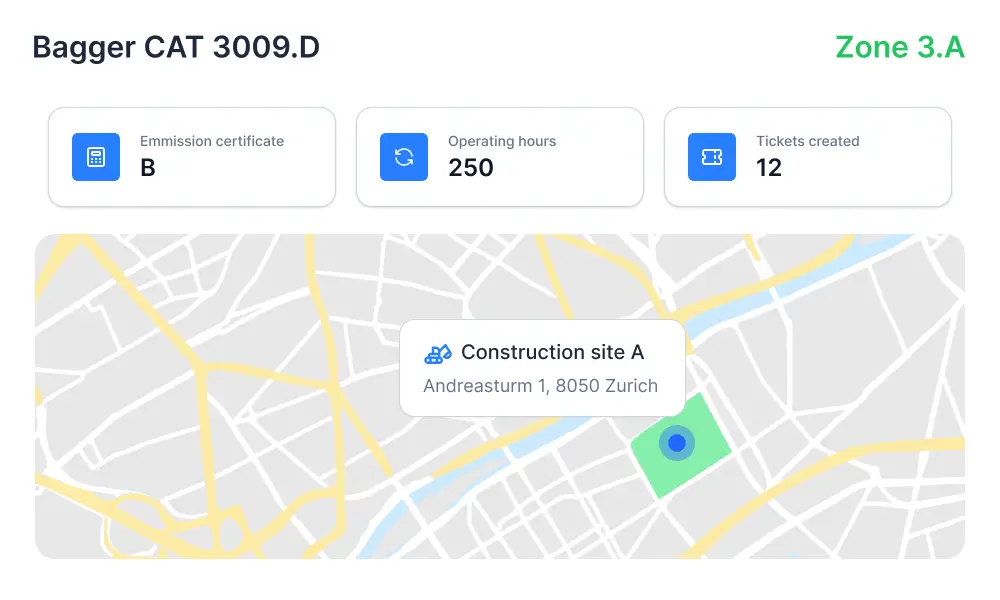
Timly offers various interfaces to other applications, including the integration of IoT sensors. This makes it possible to track metrics such as distance traveled and operating hours.
With Timly, inventory data is updated automatically—from locations and mileage to operating hours. This ensures all information stays current without any manual effort.
Automated Data Collection
Whether it’s locations, mileage, or operating hours, many pieces of information need to be continuously updated. Automation increases efficiency.
GPS Tracking
Modern, low-power GPS sensors track locations and distances traveled. This saves time and effort while also enhancing safety.
Record Operating Hours
Maintenance intervals are often dynamic. Monitor high-cost items with modern IoT sensors to ensure no scheduled maintenance is missed.
Internet of Things as a Foundation
IoT enables the networking and interaction of items. Smart sensors can often be retrofitted to existing equipment.
With smart sensors and connected systems, you can monitor your items in real time. Automatic alerts and notifications ensure transparency and security across your entire inventory.
Real-Time Information
Data is continuously exchanged between connected components, giving you direct access to real-time information.
Automatic Monitoring
Receive alerts when set geo-fences are crossed or notifications when fill levels are reached—just two examples of automated monitoring.
Integrated Notification System
When a predefined event occurs, you receive an immediate notification. Manual checks are no longer necessary, helping protect valuable inventory more effectively.
In most cases, this is possible. For vehicles, for example, the OBDII interface is used, so no external power supply is needed. Other sensors are very energy-efficient and can run on built-in batteries for several years.
IoT sensors can come with their own network connection via an IoT SIM card. Alternatively, gateways can be used, connecting the sensors via Bluetooth. In this setup, the gateway forwards the information to the network.
It depends on the individual case. Manual checks incur labor costs and can easily be overlooked in daily operations. For high-value inventory, using IoT sensors is often worthwhile, as automated tracking of costly items also enhances security.