Emergency First Aid At Work: Requirements, Duties and Legal Regulations
From insight to action – get to know Timly now!

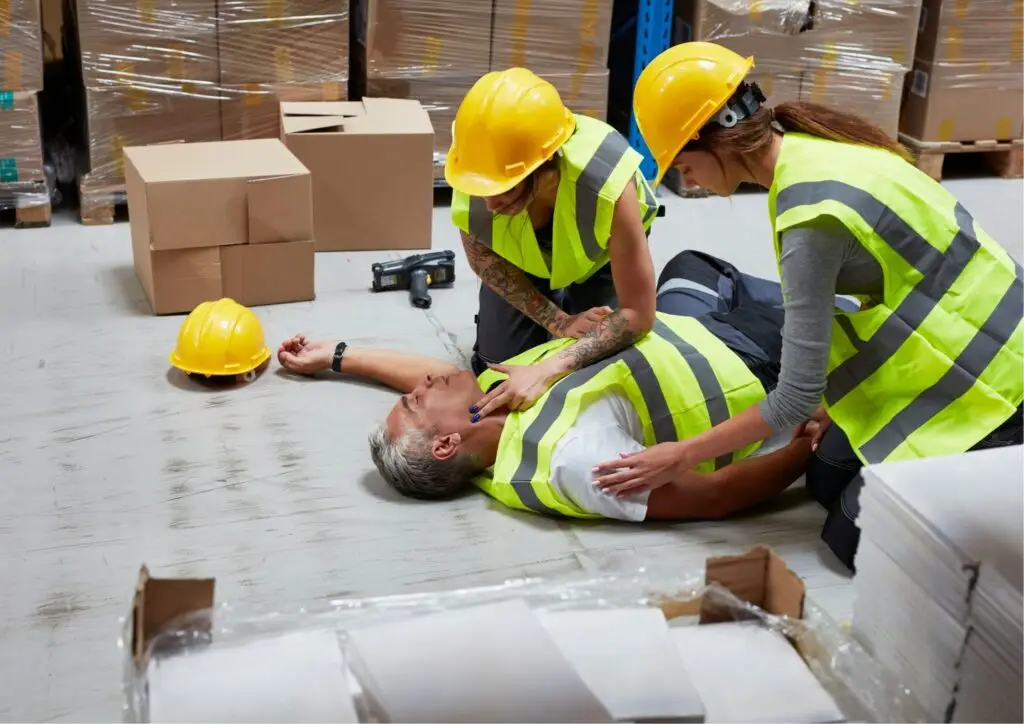
Emergency First Aid At Work plays a vital role in keeping workplaces safe and prepared. Even with strong safety assessment, risk management and safety procedures, accidents and sudden illness can’t be ruled out completely. Prompt first aid at work can limit harm, prevent a condition from worsening, and sometimes, most crucially, even save a life.
In the UK, employers’ first-aid duties are set out in the Health and Safety (First-Aid) Regulations 1981, which require adequate first-aid equipment, facilities, and personnel appropriate to the workplace’s risks. In the US, comparable obligations fall under OSHA standards (29 CFR 1910.151). These require adequate first-aid supplies and trained personnel, especially where a workplace isn’t close to a hospital or clinic.
This guide covers what Emergency First Aid At Work involves, the legal requirements in the UK and US, how employers determine appropriate staffing and training, and how digital tools can support administration.
What Is Emergency First Aid at Work?
Emergency First Aid At Work (EFAW) is a workplace first-aid qualification that prepares employees to give immediate assistance to someone injured or ill at work.
The goal is to bridge the gap until professional medical help, such as ambulance services or other responders, arrives. A qualified first aider has completed training suited to the workplace’s needs and holds a valid certificate of competence. The HSE recognizes both Emergency First Aid At Work and General First Aid at Work as the main UK qualifications, alongside other training an employer’s risk assessment may identify as appropriate.
EFAW is a UK-specific qualification name. US employers meet similar obligations through OSHA-aligned first-aid, CPR, and AED training from providers such as the American Red Cross, American Heart Association, or National Safety Council. OSHA sets the requirement itself but doesn’t certify one named qualification the way the HSE does.
A suitable first aider should be reliable, calm under pressure, and positioned to respond without delay. This matters especially for shift work, multiple buildings, remote teams, warehouses, construction sites, or lone workers. Of course, EFAW does not make someone a doctor or paramedic. Its purpose is safe, smart, and immediate care until further (proper) treatment is available.
UK: Health and Safety First Aid Regulations 1981
The health and safety first aid regulations 1981 require UK employers to provide first-aid equipment, facilities, and suitable people that are adequate for their workforce, and to inform employees of the arrangements in place. Rather than fixing one universal ratio, the first aid at work regulations require a documented first-aid needs assessment. This weighs factors such as:
- The type of work and associated job hazards, and the likelihood and severity of injury or illness
- Workforce size, layout, shift patterns, overtime, seasonal work, and absences
- Accident history, and the needs of remote, traveling, or lone workers
- Proximity to emergency medical services, and the presence of visitors, contractors, or the public
- Multi-site or shared premises, and high-risk tasks like construction, machinery, work at height, or hazardous substances
If the assessment concludes a trained first aider isn’t necessary, the employer must still appoint someone to take charge of arrangements. That person isn’t automatically qualified to give first aid without suitable training, though. The key principle behind the health and safety and first aid regulations is simple: a first-aid box alone isn’t enough. Arrangements must allow prompt, effective care.

US: Workplace First-Aid Requirements (OSHA)
US employers operate under a different legal structure, but the goal is the same. Under the OSHA General Duty Clause and 29 CFR 1910.151, employers must ensure medical advice is available and first-aid supplies are accessible. Where a workplace isn’t close to a hospital, clinic, or infirmary, at least one employee must be trained to give first aid. Construction, maritime, and agriculture also carry additional industry-specific OSHA standards.
OSHA doesn’t certify a named qualification equivalent to EFAW. Employers typically use Red Cross, AHA, or NSC courses to meet the requirement, and some states run their own OSHA-approved plans with additional obligations on top of the federal baseline. US employers should weigh similar factors to the UK assessment: distance to emergency care, hazard severity, workforce size and shift coverage, remote or lone workers, and industry-specific rules.
How Many First Aiders Are Needed?
Neither the UK nor the US sets a fixed ratio on how many first aiders are needed in specific cases. Both simply require enough trained people, positioned appropriately, so first aid can be given without delay. In the UK, HSE guidance suggests an appointed person may suffice for a very small, low-hazard workplace such as an office, shop, or library.
Where 25 or more people are employed, though, at least one EFAW-trained person should generally be available. Higher-risk sectors, including manufacturing, logistics, engineering, warehousing, agriculture, utilities, laboratories, and construction, typically need more extensive coverage. That coverage should be distributed across shifts, buildings, and remote areas rather than simply sized to total headcount.
In the US, OSHA takes a similarly functional approach. Many employers benchmark at least one trained first aider per shift or work area, particularly where medical care is far away. This is a practical baseline rather than a strict federal formula, and state plans may add further specifics.
Construction first aid training deserves particular attention in both countries, given risks like falls, moving vehicles, power tools, manual handling, excavation, electrical hazards, and work at height. Employers should assess whether standard-level training is enough, or whether more advanced qualifications, more first aiders, or dedicated facilities are needed.
Emergency First Aid at Work Duties
A trained first aider’s core role is providing appropriate immediate care during a workplace accident or medical emergency, within the scope of their training. Typical duties include:
- Assessing the situation and approaching safely
- Providing emergency first aid, including life-saving actions where necessary
- Calling emergency services when needed (999 or 112 in the UK, 911 in the US), or directing a colleague to do so
- Managing bleeding, burns, shock, choking, unconsciousness, and seizures within their training
- Monitoring the injured person, securing the area, and directing responders to the correct location
- Recording the incident per company procedure
First aiders should never exceed their training or act as a substitute for professional treatment. If there’s any doubt about severity, emergency help should be called without delay. Employers should also make sure first aiders know equipment locations, how to contact emergency services, and how to guide responders to the right site.
First Aid at Work Training
Training should match the outcome of the employer’s needs assessment. The UK has two principal levels; the US relies on OSHA-aligned provider courses instead.
| Training type | Typical purpose | Suitable workplaces |
|---|---|---|
| Emergency First Aid At Work (UK) | Essential emergency first-aid skills | Lower-risk workplaces identified via needs assessment |
| First Aid at Work (UK) | EFAW content plus training for a wider range of injuries/illnesses | Higher-risk, larger, or complex workplaces |
| OSHA-aligned first aid / CPR / AED (US) | Emergency response, CPR, AED use (Red Cross / AHA / NSC) | Workplaces far from medical facilities or with elevated hazards |
| Construction first aid training | Standard first-aid content plus jobsite-specific hazards | Construction sites, contractors, trades, high-risk fieldwork |
What Does Emergency First Aid at Work Training Involve?
Emergency first aid at work training is typically delivered as a one-day course, either in person or through a blended format that combines online learning with a shorter practical session. It’s built around hands-on, scenario-based learning rather than classroom theory, since the goal is confident action in a real emergency rather than memorized facts.
A typical course covers:
- Understanding the role and responsibilities of a first aider, including when to call emergency services
- Managing an unresponsive casualty, including the recovery position and monitoring breathing
- Cardiopulmonary resuscitation (CPR) and use of an automated external defibrillator (AED)
- Recognizing and responding to choking
- Controlling bleeding and treating wounds
- Managing shock
- Dealing with minor injuries, such as small cuts, burns, and sprains
Assessment is usually practical and continuous, with the trainer observing candidates throughout the day rather than relying solely on a written test. On completion, candidates receive a certificate of competence valid for three years.
Employers should choose a training provider that can demonstrate its course meets HSE’s approval criteria and reflects the specific hazards identified in the workplace’s first-aid needs assessment. This is especially relevant for construction first aid training, where the standard EFAW syllabus may need to be supplemented with content covering site-specific risks.
Because emergency first aid at work training results in a time-limited qualification, it should be built into a recurring schedule rather than a one-off booking. Employers should plan training dates around certificate expiry, staff turnover, and periods of high absence, so that coverage doesn’t quietly lapse between renewal cycles.
Employee first aid training shouldn’t be treated as a one-off exercise more broadly, either. Employers should select employees likely to stay available and train enough people to cover annual leave, sick leave, and turnover.

First Aid at Work Qualification
A valid first aid at work qualification, whether First Aid at Work or EFAW, is required for UK-designated first aiders. Certificates last three years, and HSE recommends annual refreshers on top of that. In the US, Red Cross- or AHA-issued first-aid/CPR/AED certifications are typically valid for two years. US employers should track renewals on that shorter cycle rather than assuming the UK’s three-year timeline applies to them.
Employers in both countries should keep accurate records for each first aider, including name, role, qualification type, training provider, completion and expiration dates, work location and shift, and any refresher training completed. Expired certificates mean an employee shouldn’t be counted as a qualified first aider under current arrangements, whether in the UK or the US.
First Aid Equipment and Facilities
- First aid in the work place needs more than trained people.
Equipment and facilities should match what the needs assessment finds about hazards, workforce size, and accident history. A basic setup includes clearly marked, regularly checked, and restocked first-aid kits. Larger or higher-risk sites may need multiple kits, eyewash stations, burn kits, automated external defibrillators (AEDs), stretchers, or dedicated first-aid rooms. AEDs in particular are common in both UK provision and US OSHA-adjacent programs.
Employees should know who the designated first aiders are, how to reach them, and where equipment is kept. They should also know which emergency number to call (999 or 112 in the UK, 911 in the US), how to report an incident, what to do if a first aider is unavailable, and where responders should enter the site. Clear signage and digital access to current contacts both improve effectiveness, and backup arrangements matter across shifts or absences.
Common First-Aid Management Challenges
As businesses grow, issues tend to recur. Expired qualifications can go unnoticed when records are managed manually, creating a false sense of coverage. Availability gaps show up when trained staff cluster on one shift or department, leaving other times uncovered; needs assessments should account for leave and remote work to catch this. Multi-site coordination is trickier still, since construction first aid training and coverage often needs planning per active jobsite rather than centrally.
Maintaining records of qualifications, training dates, renewals, equipment checks, and incidents helps organizations confirm their first aid at work arrangements are actually working, whether under UK health and safety and first aid regulations or US OSHA standards.
Digital First-Aid Administration
Digital tools simplify Emergency First Aid At Work administration for UK, US, or dual-market organizations. They replace paper files and spreadsheets with centralized qualification, location, and equipment data. Timly’s management software brings personnel information, training records, and equipment together in one system, so supervisors can see who holds a valid EFAW or First Aid At Work qualification in the UK, or an OSHA-aligned certification in the US, and when renewal is due. That’s especially useful given the UK’s three-year and the US’s two-year renewal cycles.
Automated reminders help schedule first aid at work training and employee first aid training before certificates lapse, and let managers confirm every shift, site, or construction project has coverage. Cloud and mobile access, including QR codes placed at a warehouse, office, or jobsite, let employees quickly find current first aiders and equipment locations.
Digital incident documentation supports a more consistent approach to first aid in the work place and helps demonstrate active management of UK or US requirements.
Conclusion
Emergency First Aid At Work is central to workplace health and safety on both sides of the Atlantic.
Prevention comes first, but trained first aiders make the critical difference when accidents happen. UK employers must meet the Health and Safety (First-Aid) Regulations 1981 through a documented needs assessment rather than a fixed ratio. US employers face a functionally similar OSHA obligation: ensure trained personnel and adequate supplies are available without delay.
Businesses should ensure first aiders hold a valid First Aid At Work qualification or EFAW qualification in the UK, or an OSHA-aligned certification in the US. Coverage should extend across all relevant working hours, and refresher training should be scheduled in good time. That typically means three-year UK certificates with annual refreshers recommended, and two-year US certifications.
With digital qualification management, automated reminders, mobile access, and centralized documentation, Timly helps employers manage Emergency First Aid At Work requirements reliably, wherever they operate.
FAQs About Emergency First Aid At Work
Because accidents and sudden illness can occur despite preventive measures. Qualified first aiders provide immediate assistance and help stabilize an employee until professional medical support arrives. UK employers must provide adequate arrangements under the Health and Safety (First-Aid) Regulations 1981; US employers have a comparable OSHA obligation.
No. EFAW covers essential emergency skills for lower-risk environments, while First Aid at Work includes EFAW content plus training for a broader range of injuries and illnesses.
Three years in the UK, with annual refreshers recommended and requalification needed before expiry. US first-aid/CPR/AED certifications are typically valid for two years, depending on the issuing organization.
It depends on the employer's needs assessment in the UK, or a risk-based determination in the US. Hazards, workforce size, shifts, distribution, accident history, lone or remote workers, and expected absences all factor in. Neither system sets a fixed ratio.
Yes, in both the UK and US. Higher-risk construction activities often call for more first aiders, broader training, additional equipment, and site-specific procedures that reflect each project's hazards and workforce.
Not by that name. OSHA requires trained personnel and adequate supplies but doesn't certify a specific named qualification the way HSE does with EFAW. US employers typically meet the requirement via Red Cross, AHA, or NSC first-aid, CPR, and AED courses.
Related Articles

Workplace Injury Prevention: DGUV Regulations, Risk Assessments, and Occupational Safety
September 14, 2026
LOLER: A Comprehensive Guide to Lifting Operations and Lifting Equipment Regulations
October 22, 2025
Environmental Health & Safety (EHS): Definition, Compliance, Regulations, and Best Practices
August 10, 2026
PUWER: Complete Guide to the Provision and Use of Work Equipment Regulations
September 30, 2025
Pressure Vessel Regulations: Inspection Duties, Intervals and Practical Organization
May 5, 2026
EHS Software: Organizing Workplace Safety Digitally and With Full Compliance
September 23, 2026