Topics in This Article

Integrated Safety Management: Driving Compliance and Protecting People

Modern companies face increasingly complex challenges when embedding safety management into their core workflows, and effective management of health and safety at work has become an inseparable component of responsible corporate behavior. Beyond legal mandates, modern safety management is also driven by an organization’s commitment to protecting employees, customers, contractors, and local communities.

The development of a comprehensive safety and risk management system allows companies to mitigate workplace hazards systematically and proactively, making safety management and health & safety management essential daily management tasks and not just compliance checkmarks. Contemporary software solutions now play a key role in digital safety inspections, supporting both operational and strategic aspects of safety and health and safety compliance as companies scale and diversify their operations.

The Importance of Safety Management ​

Safety management is recognized as a strategic requirement for business resilience, asset protection, and reputation. Through structured risk identification and control systems, organizations safeguard their workforce and facilities—from factories and warehouses to mobile service fleets.

With the increasing number of operational risks, such as technical failures, environmental threats, and organizational bottlenecks, safety and risk management must evolve fast enough to match these threats. It is also crucial for management of health and safety at work to address compliance with standards such as OSHA, ISO 45001, and industry-specific legislation, especially for companies operating internationally.

An integrated approach, combining technical solutions and organizational measures, allows organizations to address health & safety management challenges across industries: construction risk management and general construction industry safety for building sites, fleet safety management for logistics and transportation, and robust health and safety documentation for all sectors. Continuous evaluation and improvement of health and safety compliance guide businesses to sustain operational excellence—shifting safety management from being a departmental function to a company-wide culture.

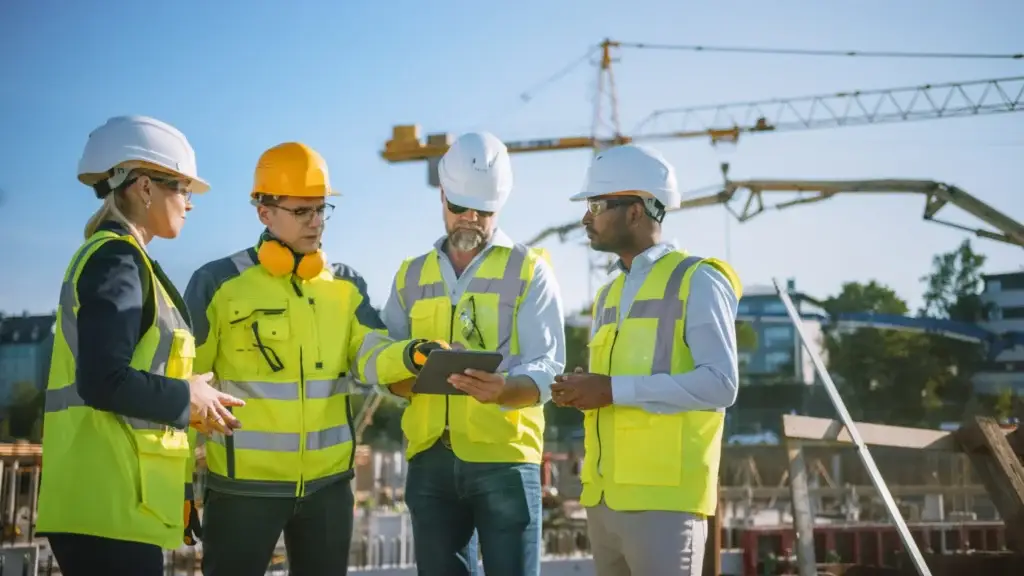
Safety management is crucial to stay compliant and save lives

What Exactly Is Safety Management?

Modern safety management, often referenced in the context of safety and risk management or h&s management, goes beyond basic occupational protections to form a multifaceted, sustainable foundation for any thriving enterprise. Definitions have broadened to encompass preventative strategies, technical controls, and organizational procedures—all working together within a health & safety management system. Prevention is now data-driven, relying on digital tools for incident tracking, real-time hazard reporting, and predictive risk analytics.

There are areas where this topic seems even more crucial because of the apparent risk factor. That is why ladder safety for example is specifically mentioned in work at height regulations.

The management of health and safety at work acts, along with industry standards, set out frameworks for safety management—such as the ANSI Z10 and ISO 45001 approaches—where every process is continuously monitored, and regular program evaluation ensures adaptability. By harmoniously connecting the safety management system with quality management (QM) and Health-Safety-Environment (HSE) systems, organizations cultivate resilience, accountability, and the ability to anticipate new risks or regulatory changes.

Technical Safety Management (TSM) – Definition

Technical safety management (TSM) is a highly specialized function within broader safety and risk management, designed to guarantee operational integrity and regulatory compliance in high-risk sectors. Industrial manufacturers, utilities, and infrastructure operators deploy systematic hazard identification, real-time monitoring via sensors, IoT integration, and rigorous asset maintenance schedules to maintain functional safety and minimize failures. Automated tools and digital health and safety documentation ensure all technical controls and certifications are always current and audit-ready.

These processes are documented extensively through centralized platforms and digital safety inspections, tying together organizational protocols and technical inspections. TSM activities intersect with broader safety management efforts, and through cross-functional collaboration, organizations achieve robust, adaptive protection for employees, contractors, and the public.

Methods and Models for Application

Leading safety management practices now feature advanced risk assessment models, dynamic incident reporting systems, and continuous education modules. The accident pyramid remains a crucial teaching tool, demonstrating how small deviations and near-misses are early signs of larger risks. Visual inspections still play an important role as well though state-of-the-art digital tools now automate the logging and analysis of such events, empowering field crews and health & safety management specialists to respond and prevent escalation promptly. 

Structured risk assessments and digital hazard analyses not only strengthen health and safety compliance but also enable companies to adapt to complex, changing workplace environments quickly.

Integration with digital platforms means that incident investigations, corrective action workflows, and performance analytics occur in real time, supporting management of health and safety at work across every department. Continuous professional development and feedback loops are built right into mobile and cloud-based systems, driving employee engagement and a positive safety culture.

Implementing Safety Management in Practice

A modern safety and risk management strategy starts with strong leadership and clear allocation of roles and responsibilities. Senior management now takes a visible, accountable role in safety policy formation—supported by automated reminder systems, dashboard reporting, and universal access to health and safety documentation. Health and safety compliance improves through ongoing audits, safety inspections via smartphones and tablets, and instant feedback from staff on lessons learned and areas needing improvement.

Extensive employee training and digital microlearning are combined with advanced notification systems tracking expiring certifications, scheduled inspections, and incident status updates. Modern safety management platforms ensure that all health & safety management controls are documented, yes, but also proactively actioned by those closest to the work.

Practical Application in Companies

Digitally enhanced safety management systems enable organizations to implement multi-site audits, rapid mobile reporting, automated certification tracking, and centralized control over all contractor records. In sectors like construction risk management and fleet safety management, these tools help organizations ensure readiness for both internal and regulatory audits—sometimes reducing preparation time by 40% or more.

Detailed procedural guides, digital SOPs, and standardized compliance checklists ensure that operational practices are safe, transparent, and always up-to-date. Crane inspections for example can be easily documented with modern digital tools.

For organizations managing distributed assets, such as fleet safety management or decentralized construction risk management, digital health and safety documentation provides centralized oversight and enables quick corrective responses, ensuring reliable health and safety compliance for every worksite.

Safety management can be tracked digitally

Legal Aspects and Compliance With Safety Standards

Legal frameworks and management of health and safety at work acts require that safety management and health & safety management systems provide traceability, accountability, and proof of compliance. There are many specific regulations that ensure safety: PUWER and LOLER for example. Regulatory bodies expect not only complete documentation but also demonstrable evidence of ongoing improvement. Automated compliance platforms now track, archive, and alert on every aspect of the safety management lifecycle, helping companies meet OSHA, ISO, and local statutory requirements effortlessly. 

In certain industries, general checks are not just mandated by law but also by unions. Electrical installations as well as electrical equipment safety are some of the most important areas to name.

Severe fines and penalties await organizations with lax health and safety compliance—making continuous monitoring and digital documentation essential. A proactive approach also builds trust and transparency with insurers, investors, and the workforce, supporting organizational goals for safety and risk management and elevating health & safety management practices to industry leadership standards.

Supporting Safety Management With Software

Software now forms the backbone of modern safety management in construction management and beyond, from real-time risk prediction and automated compliance tracking to digitized health and safety documentation. Timly offers a robust platform enabling the centralization of all safety records, digital safety inspections, qualification management, and instant reporting—all compliant with privacy regulations and designed for ease of use. Managers and H&S specialists benefit from automated reminders for required trainings and renewals, supported by visual dashboards and mobile app interfaces for streamlined workforce planning and incident response.

Digital asset management is further strengthened through QR code workflows, enabling field staff to access machinery manuals, checklists, and maintenance logs instantly. This technology supports comprehensive management of health and safety at work, simplifies fleet safety management, and ensures project teams achieve high levels of compliance and operational readiness.

Conclusion: Safety Management as a Success Factor

Safety management is now universally recognized as a strategic differentiator—as important as financial management or product innovation. Advanced digital solutions, sophisticated data analytics, and a culture of safety and risk management unite prevention, technical controls, and organizational agility. Companies that invest in holistic, scalable safety management systems—encompassing everything from construction risk management to digital safety inspections and health and safety documentation—achieve not just regulatory compliance, but measurable gains in efficiency, reputation, and resilience.

By leveraging platforms such as Timly, businesses can future-proof their safety systems, activating best practices for safety management, health & safety management, and health and safety compliance in every location.

FAQs About Safety Management

By automating compliance tracking and centralizing health and safety documentation, software drastically reduces time spent on audit preparations and helps organizations remain perpetually audit-ready without manual effort.

A robust platform should enable incident reporting, risk assessment, certification tracking, digital inspections, real-time monitoring, and secure documentation—all integrated to support health & safety management and safety and risk management at every level of the organization.

Instant incident reporting from mobile devices allows for prompt investigations and corrective actions, reducing incident severity and recurrence while reinforcing health and safety compliance throughout distributed workforces.

Centralized digital systems give managers a clear, holistic view of compliance across all projects and teams, simplify document management, notify of expiring certifications, and support proactive risk prevention and mitigation, strengthening safety and risk management overall.