Topics in This Article

Safety is the foundation of every great construction project—affecting lives, timelines, reputation, and business viability. Nowadays, construction industry safety is defined by robust regulations, advanced safety equipment, and proactive safety management practices that work together to minimize risk, injuries, and occupational health hazards on-site. From construction safety equipment and PPE to OSHA and UK regulations, a high-performing safety culture is key to delivering successful, compliant projects.

Evolving Construction Safety Regulations and Standards

The UK and US construction industries are governed by a complex network of laws and standards, which are constantly updated to reflect lessons learned from past incidents as well as technological advances. The Building Safety Act now sets out stricter requirements for high-risk buildings, mandating detailed “golden thread” safety documentation and regular risk reassessment across a building’s entire lifecycle.

Key changes and standards include:

  • Mandatory fire safety upgrades (like sprinklers in new care homes and stricter evacuation procedures for tall residential buildings).
  • Transition from outdated fire ratings (BS 476/Class 0) to Euroclass system (EN 13501) for clearer, more robust material safety compliance.
  • The “three gateway” approach: rigorous approval and sign-off at planning, pre-construction, and occupancy stages to ensure compliance with safety and building regulations.
  • Building Safety Regulator (BSR) oversight, monitoring competence, and the “golden thread” of safety-critical information for new and existing buildings.

In the US, OSHA’s construction standards remain the blueprint for legal compliance, covering everything from fall protection and scaffolding to electrical safety, crane use, and health requirements. OSHA emphasizes the prevention of falls, struck-by, caught-in/between, and electrocution hazards—a model for best practice worldwide.

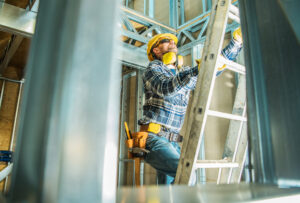
Construction Industry Safety is crucial to stay compliant and protect workers' lives

Construction Safety Equipment: From PPE to Smart Wearables

The evolution of construction site safety equipment is central to reducing on-site risks. No site is complete without the basics: hard hats, high-visibility vests, safety boots, goggles, gloves, harnesses, and adequate fall protection systems. Increasingly, these essentials are being enhanced by smart safety equipment such as:

  • Wearable sensor technology embedded in helmets, vests, and boots to monitor fatigue, environmental hazards (e.g., heat, gas), and alert supervisors to falls or proximity risks.
  • Connected safety platforms that integrate real-time data from wearables, environmental sensors, and machine telematics, providing a full view of site risk profiles.
  • Enhanced respiratory protection (for dust, silica, fumes), lockout/tagout systems for electrical safety, and advanced guardrail or barrier systems for edge and excavation safety.

Selecting, maintaining, and tracking the right safety gear is fundamental, but only effective when combined with training, audits, and responsive supply systems.

Health and Safety on Construction Sites: Key Practices

Health and safety on construction sites hinge on a layered approach:

  • Detailed risk assessment and site-specific safety plans before, during, and after construction phases.
  • Mandatory PPE for all workers, with role-specific enhancements as required.
  • Traffic management: Safe separation of people and vehicles, clear onsite routing, and the use of banksmen or marshals.
  • Toolbox talks and daily safety briefings to reinforce hazards, new controls, and encourage worker engagement in safety goals.
  • Strong signage, clear work zone demarcation, and regular site audits to identify and correct unsafe practices.
  • Special controls for high-risk activities—working at height, crane lifts, demolition, hot works, confined spaces, and hazardous material handling.

The modern “safety culture” ensures everyone on site is both authorized and responsible for identifying hazards, reporting near misses, and escalating risks without fear of reprisal.

OSHA Construction Standards and Their Impact

OSHA construction industry standards set the baseline for workplace safety in the US. Compliance with strict safety standards ensures that contractors, site owners, and supervisors systematically address critical hazards.

Key requirements include:

  • Written safety and health programs, regular hazard assessments, and clear communication of standards.
  • Hazard-specific protocols for falls, scaffolding, excavations, electrical work, cranes, ladders, and machine guards.
  • Reporting and investigation of incidents, recordkeeping, and workers’ right to a safe work environment.
  • Competency requirements for supervisors and workers, with mandatory training for high-risk tasks (e.g., crane operators, welders).

Violations can result in heavy penalties, site stoppages, or criminal charges—underscoring the need for robust compliance management.

Managing Health and Safety in Construction: Strategic Approaches

Construction safety management is more than ticking boxes—it’s the integration of leadership, digital tools, training, real-time monitoring, and continual improvement. Leading contractors use:

  • Centralized platforms for organizing inspections, asset tracking, maintenance, and compliance documentation.
  • Digital checklists and automated reminders for equipment inspections, competency renewals, and permit-to-work systems.
  • Data analytics and reporting to spot trends, reduce repetition of incidents, and measure progress against KPIs.
  • Collaboration between safety teams, project managers, and workers—all empowered to halt work if unsafe conditions arise.

A successful management system builds in regular reviews of safety performance, draws on feedback from the workforce, and embeds a cycle of learning and adaptation.

Construction Safety Solutions: Innovation & Technology

In addition to wearables, most effective modern innovations include:

  • Drones for aerial surveying of hazards, monitoring restricted zones, and rapid incident assessment.
  • Mobile apps for hazard reporting, remote inspections, and health monitoring.
  • AI-powered platforms for risk prediction, workforce fatigue tracking, and automated compliance alerts.

Combining hardware (sensors, cameras, automated barricades) and software (site management dashboards, automated documentation) delivers a safer, more transparent, and efficient workplace.

Following Construction Industry Safety regulations is mandatory on construction sites

Construction Safety Regulations: Global and Local Trends

Navigating the web of local and international regulations is non-negotiable for global firms. In the UK, the Building Safety Act and updated fire and life safety regimes now command strict “competency” from every professional, more frequent documentation, and robust government oversight. In the US, OSHA enforcement increasingly focuses on repeat offenders and high-severity risk categories.

Internationally, ISO standards such as ISO 45001 (Occupational Health & Safety Management) offer frameworks that support cross-border projects in harmonizing standards, ensuring legal compliance, and demonstrating due diligence.

Occupational Health in the Construction Industry

Occupational health in construction is now rightly regarded as important as physical safety. Chronic musculoskeletal disorders, noise-induced hearing loss, occupational asthma, heat stress, and work-related stress or anxiety are all major concerns. Regulatory agencies require:

  • Pre-employment and periodic health screenings.
  • Control of noise, vibration, and exposure to silica, asbestos, or hazardous chemicals.
  • Access to mental health support, onsite welfare, hydration, and rest facilities.
  • Ergonomic planning for repetitive or strenuous tasks.

A holistic view of “safe work” means supporting both physical and psychological health for all construction professionals.

Building a Culture of Construction Workplace Safety

High-functioning sites establish a safety-first culture from day one. Strong leadership, commitment from every employee, integration of safety into planning meetings, and open channels for feedback are key. Initiatives include “Safety Stand Down” days, peer-to-peer recognition programs for safe behaviors, and continuous learning and adaptation to near-misses or incidents.

Conclusion: Construction Safety as the Cornerstone

Construction site safety regulations, equipment, and management systems form the cornerstone of a responsible, successful construction business. Best-in-class performance means staying current on legal changes, embracing new technology, supporting occupational health, and engaging the workforce at every level. By prioritizing compliance, training, digital solutions, and culture, firms not only avoid incidents—they unlock productivity, trust, and excellence in every project.

FAQs About Construction Industry Safety

The Building Safety Act mandates the “golden thread” of safety documentation, more stringent risk assessments, regular gateways of compliance, and requires fire safety upgrades (like mandatory sprinklers in care homes).

OSHA sets industry standards covering everything from fall prevention and electrical safety to incident reporting, ensuring all sites follow systematic, enforceable protocols.

Required gear includes hard hats, hi-vis vests, boots, gloves, eye and hearing protection, harnesses, and increasingly, smart wearables that detect hazards and alert supervisors.

Successful firms use digital platforms, continuous training, worker engagement programs, and data analytics to monitor, enforce, and improve compliance and incident response.